



Beyond the cruise ship crowds lies the real Ketchikan—a rugged rainforest realm where black bears feast on salmonberries, bald eagles snatch salmon from creeks, and the spirit of Alaska’s frontier past still echoes through cedar-planked streets. We traded the tourist junkets for Yamaha Wolverines and charter boats to explore the wild heart of Alaska’s First City.
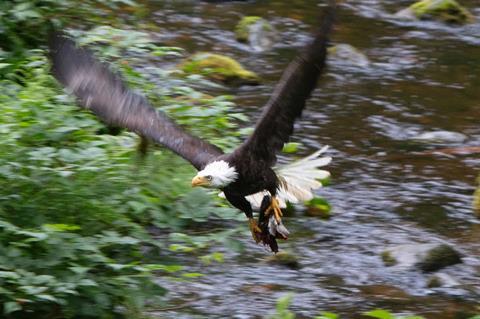
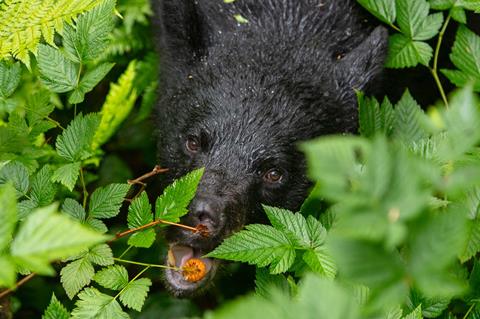
Gathered below a towering canopy of cypress, I stood in silence as a large black bear slowly trundled its way through the understory as it crossed a creek and turned in my direction. Spooked by the bear’s presence, a bald eagle leaped from the water, its powerful wings lifting it above the brush as its razor-sharp talons clung to the shredded remains of its breakfast.
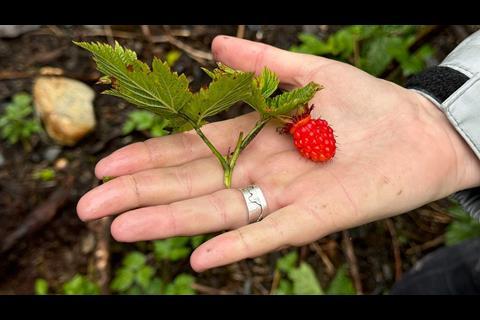
The unfortunate salmon didn’t have a chance, its head flopping violently like a broken bobblehead as the imposing bird-of-prey flew by within 20 feet. Eye-to-eye with Yogi, he stretched his neck out to pluck a ripe salmonberry off a vine before veering away and disappearing into the forest. This was Alaska, North America’s last frontier.
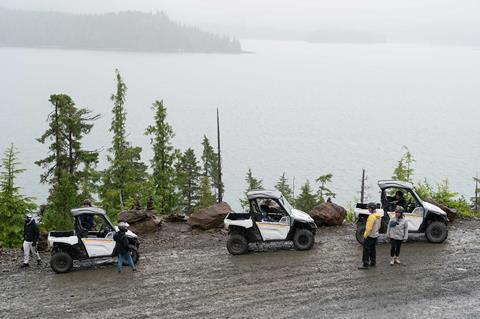
Earlier in the day we were exploring the coastline of George Inlet, a narrow fiord that slices into Revillagigedo Island, home of Alaska’s First City.
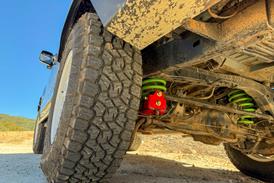
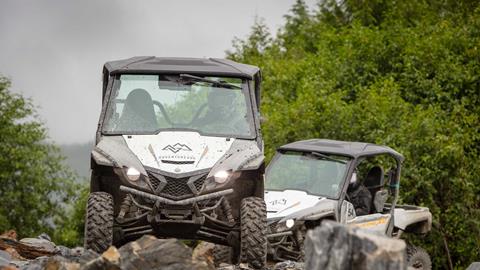
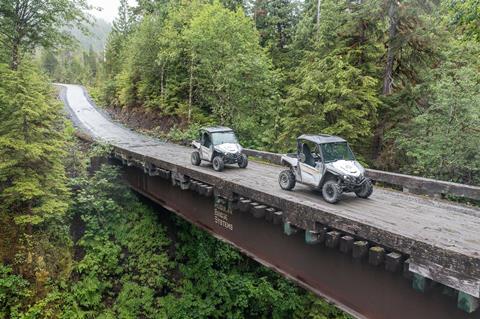
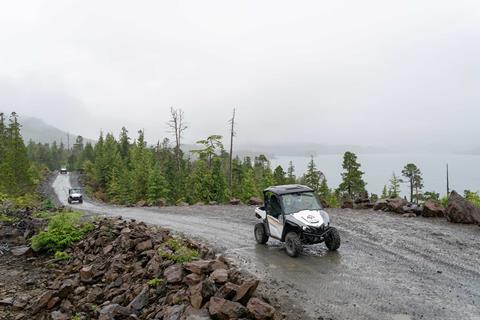
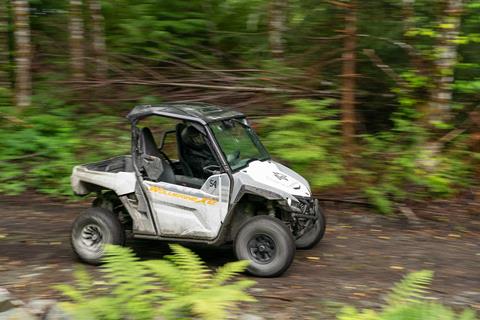
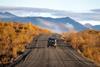
Our steeds for the day were Yamaha Wolverine X2 side-by-sides we borrowed from Ketchikan Adventurevue, one of Yamaha’s Destination partners. Rather than lining up with the tourist junkets, our small posse was free to seek out the hidden gems of a land laced with legend and lore.
Last Frontier
Although 15,000 cruising daytrippers flood out of luxury mega ships each day (more than a million per year), when the witching hour arrives for debarkation, Ketchikan’s streets are again reminiscent of its furrowed past.
Perched on a glaciated steep of the Tongass Narrows, the first European to sail these waters was Capt. George Vancouver of the British Royal Navy.
Instructed by the Crown to perform a survey of the Pacific coastline from 30° north, establish an outpost for England’s fur trade, and locate the fabled Northwest Passage, his ship, the HMS Discovery, dropped anchor here in July of 1793.
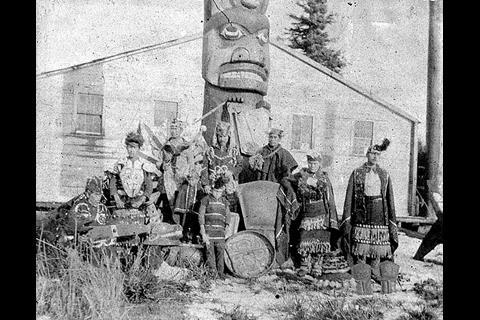
A subsequent attack by the indigenous Tlingit Indians, likely provoked by the Brits’ typically brutal disregard for native peoples, Vancouver escaped with only a few injured crewmen.
But Vancouver wasn’t the first non-Indian to ply these waters. Vitus Bering, under direction of Peter the Great to expand the nation’s depleted fur trade, arrived as early as 1741 and claimed much of the Pacific Northwest for Russia.
While the American colonies were battling Britain for sovereignty, the Spanish were attempting to extend their domain over the Pacific Coast northward from Monterey in Alta California.
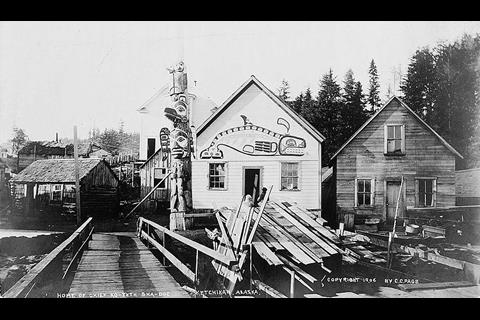
Their campaign was short-lived, leaving the Brits and Russians to vie for control. Hidden deep within the Alexander Archipelago, the Tlingit of Revillagigedo Island were mostly left to their own devices for another century.
Fiords, Rainforests, and Salmon Wars
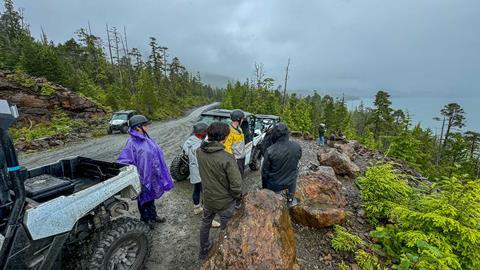
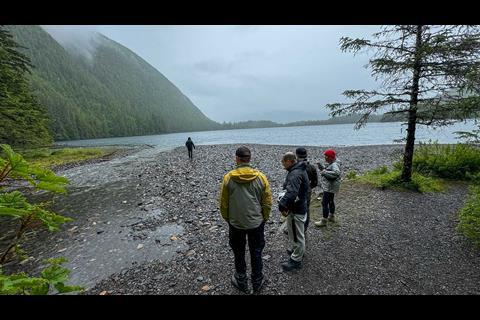
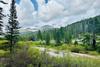
We made our way along the base of Mahoney Mountain, passing swelling creeks and dense stands of cypress before stopping for a short hike to a cirque, or glacial-formed lake of the same name.
Our guide Bethany Lickfield shared that Revillagigedo Island, part of the 17-million-acre Tongass National Forest, is largely considered a rainforest. Receiving more that 150 inches of precipitation annually, its flora and fauna have evolved around near-constant rainfall (229 days of rain or snow per year).
Vast tracks of Sitka Spruce, Western Hemlock, various cedar, and pine create the ideal environment for wildlife such as wolf, deer, mountain goat, marten, hundreds of avian species, and of course, bear.
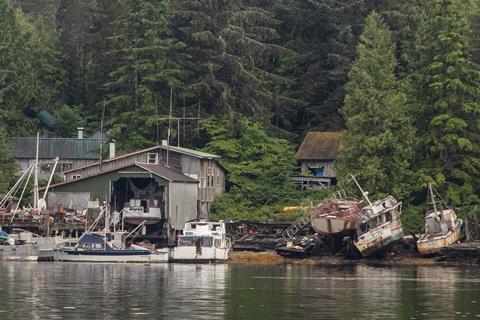
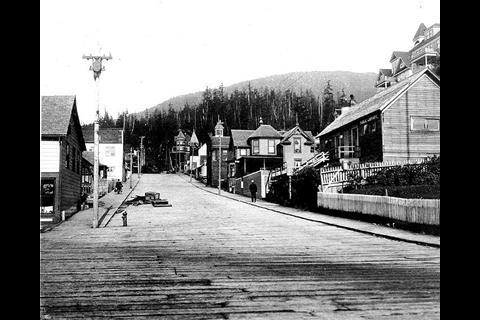
It was a harsh environment for the earliest settlers in Ketchikan to manage. Carved out of the side of a mountain island on a rugged coastline with 16-foot tides, real estate was limited and many of its buildings stood, and still stand on pilings driven into the mud and bedrock.
Those first immigrants were sturdy mountain men looking for a better life or trying to escape a shady past. Living close to the earth in ramshackle huts, they scratched out a living from the sea and hunting game.
The meaning of the word Ketchikan is vague. Some believe it is a derivative of “Thundering Wings of Eagles” in the Tlingit language, others insist it translates to “Stinky Waters” due to the omnipresent stench of dead salmon after the spawning season.
Whatever the case, legend has it that the town sprang up over a fish fight. In 1890, the newly arrived Fidalgo Island Packing Company began building a cannery south of the prime fishery at Ketchikan Creek.
Fishermen from Loring, a port to the north, representing the long-established Alaska Packers Association Cannery, laid nets in front of the creek to scoop up the salmon before their new adversaries could poach “their” salmon.
Skiffs filled with furious fishermen packed the inlet, oars, bottles, marlin spikes, and fists took flight, and many a swabbie landed in the drink. When everyone dried off, the scuffle ended with a few bumps and bruises, and the drop of a judge’s gavel. The verdict, no company can own a salmon stream.
Boomtowns, Brothels, and Gold
Other canneries were soon constructed, workers flooded in along with merchants, restauranteurs, swindlers, and ladies of questionable occupation. Logging and construction boomed, and Iowa immigrant Ott Inman built one of the most productive shingle mills in the West—featuring a 20-foot paddle wheel and producing 10,000 cedar shingles a day.
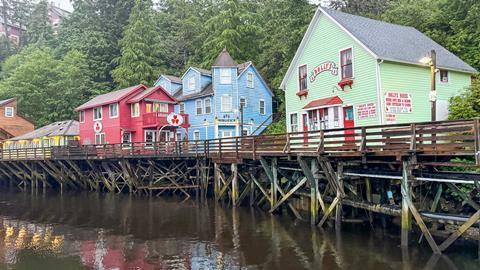
One evening we walked along the elevated boardwalk on the waterfront. With the cruising crowd on their way to their next port, all was quiet. Surprisingly, and unlike many boomtowns of California’s Gold Rush that were destroyed by fire, many of the original buildings are still standing and in use—likely due to cedar construction and a perpetually damp environment.
The one that caught our eye was Dolly’s House at 24 Creek Street. If you can image a world of strenuous work in brutal conditions and a town with few single females, it made sense the world’s oldest occupation would take centerstage.
A business license still hangs outside Dolly’s House, along with an employment application querying, “Any skills our clients might find pleasurable?” The Lord arrived around 1900 via a boatload of Christian missionaries. They were hell-bent on saving the Tlingit and purging Ketchikan of its hedonistic ways, but it would take them another half-century before they put the kibosh on Dolly’s ever-popular brothel.
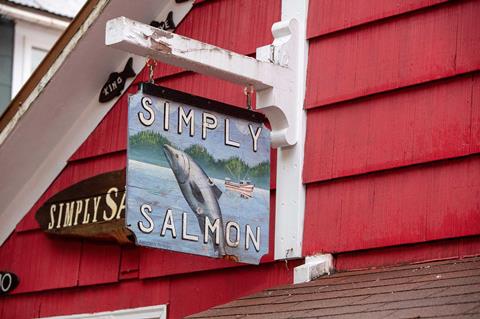
The region soon captured 80 percent of the Pacific Northwest’s salmon industry, but it would be the Klondike Gold Rush of 1897-1898 that put Ketchikan on the map as Alaska’s First City. As the most southern port of call, it became a major resupply depot for prospectors heading north.
The short-lived Klondike boom left many miners broke, aimless, and heading home, often with only enough money to reach Ketchikan before the captain gave them their walking papers. In 1900 the city incorporated, elected a mayor and Board of Supervisors, and reverted back to what it did best…reaping the bounty of the sea.
Ketchikan Alaska Adventure Gallery
Fish Tales
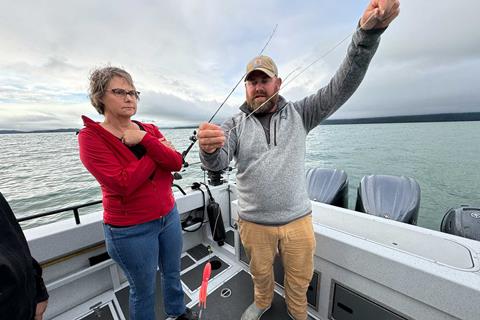
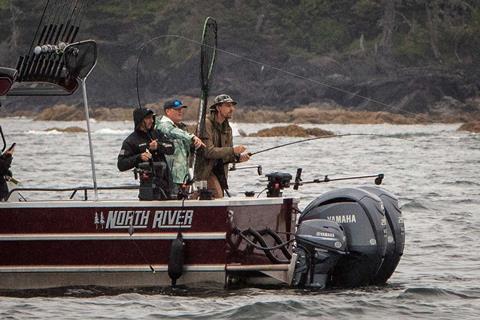
As one of the key spawning grounds for all species of Pacific salmon, we jumped at the opportunity to cast a line. At 0500 hours the following morning we were boarding a 29-foot North River XL owned by Reel Alaska Fishing Charters. Captain Colby Witt recorded our fishing license details, fired up the twin 250-horsepower Yamaha outboards, and we idled out of the harbor past a half-dozen cruise ships that arrived during the night.
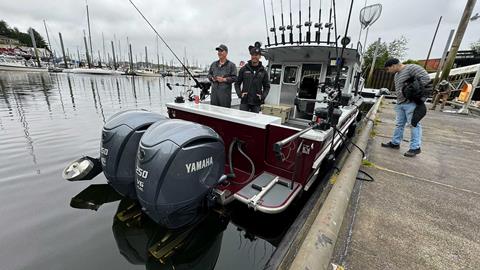
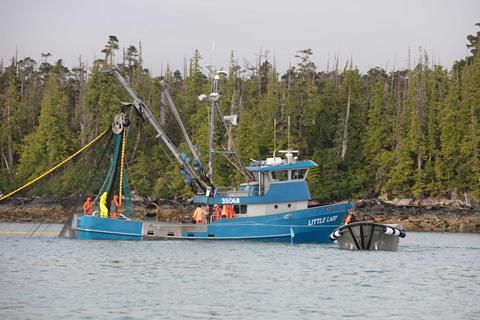
Colby shared details of the current fishing industry, explaining each of the commercial techniques as we passed various vessels. Sadly, most focus on a single species but scoop up everything in their net’s path.
They pluck out what they want and toss the rest, now dead carcasses known as bycatch, back in the water. This might include other salmon species, dolphins, sea turtles, sea birds…anything! He frustratingly said, “They toss out more in a day than we catch in a year.”
Pressing the controls forward we planed out, passing Eagle Rock, Middy Point, and Mary Island, before easing back near Foggy Point. Although cruise ships do offer fishing trips, their limited time in port only allows for half a day trips, and we had the luxury of being the only boats in the area.
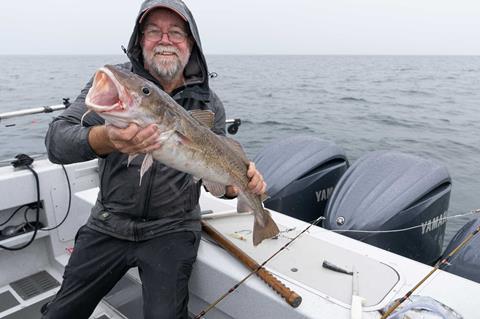
At rest in 173 feet of water Colby barked, “Who wants a drag ripper?” as he rigged a 15-pound downrigger and Gibbs jig. Spinning the downrigger meter to 100 feet, in a few seconds the rod bent over like a willow in a hurricane. Fish On! “Okay, we got activity here. Remember, smooth is fast and fast is smooth when laying in a fish.”
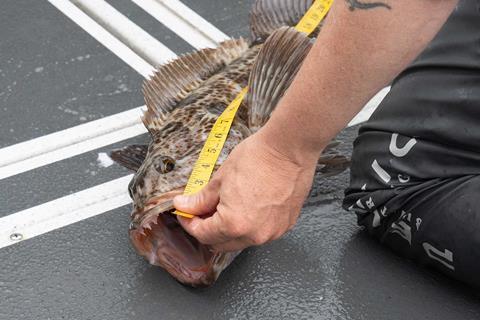
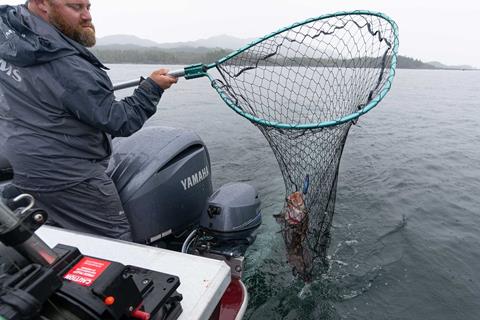
A few minutes later I was pulling a chum salmon out of the water. And so the day went; one after another we were laying in pinks, kings, chum, and silver salmon, lingcod and rock fish. Switching to a halibut rig in 100 feet of water, we couldn’t get our lines to the bottom before a flat-eyed bottom-feeder nailed it. With a full box of fish and aching forearms, we headed for the barn with a full bounty of fish. Amazing!
Seaplanes and Steam Ships
While sailing and steam ships were the only mode of transportation in the 19th and early 20th centuries, things changed in 1922 when pilot World War I pilot Roy Jones and his mechanic Gerald Smith landed an amphibious Northbird open-cockpit biplane in the Tongass Narrows and tied up to the dock.
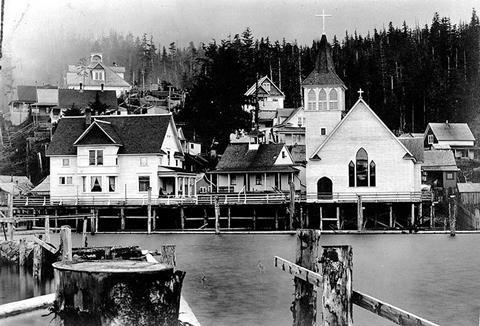
Jones’ dream was to create the first commercial air service in the region, and he soon opened the Northbird Aviation Company. Considering the towns deep aviator foots, it was only natural to hit the Bush Pilot’s Lounge for a sundowner and seafood dinner. Sitting on pilings above the water with a half-dozen float planes parked out the window, it was the ideal way to end three perfect days.
Today, this sleepy-by-night outpost deep in the Alexander Archipelago boasts a population of a mere 8,000 souls and can only be reached by air or sea. But as one of the ports along the Alaska Marine Highway System, a landlubber can load their rig on a ferry and explore this ruggedly beautiful land of the Tlingit by vehicle.
As we said our goodbyes to Captain Colby and Bethany, I put Ketchikan and the Marine Highway on my bucket list of upcoming overland adventures.
Access More Great Stories!
This article originally appeared in OVR Issue 11. For more informative articles like this, consider subscribing to OVR Magazine in print or digital versions here. You can also find the print edition of OVR at your local newsstand by using our Magazine Finder.


No comments yet