









Three years into our Land Cruiser build, we made the modifications we should have done from the beginning. After resisting advice from fellow overlanders, we removed the rear seats in favor of a cargo platform with integrated storage and a significantly upgraded house electrical system. The result is a more capable adventure vehicle that better matches how we actually use it in the field.
One rule of thumb when you’re looking to modify a vehicle for vehicle-based overland travel: you can never have too much storage space. The other rule? It never hurts to have more electrical power on tap either.
After thousands of miles and extended field testing, we revisited both of those ideas and made some meaningful changes to the OVR Land Cruiser project vehicle.
Why We Initially Kept the Land Cruiser’s Rear Seats
When we first planned the OVR LC100 build, our goal was to keep the second-row seats intact so we’d have the flexibility to carry up to four passengers. Although most of our trips are solo or with one additional person, having the option to bring more people along felt important.
This is a common dilemma for 100-series Land Cruiser owners planning overland modifications.
We wanted to strike a balance between cargo space and passenger capacity, and on paper, keeping the rear seats made sense.
Early on, fellow vehicle-based adventurers encouraged us to remove the second row entirely in favor of a flat deck. Their argument was straightforward: you’ll need cargo capacity far more often than you’ll need extra seats.
At the time, we resisted that advice and left the second row in place when the build began. In hindsight, we probably should have listened. A Land Cruiser cargo platform would be useful.
Testing the Land Cruiser Without Rear Seats: 18 Months of Real-World Use
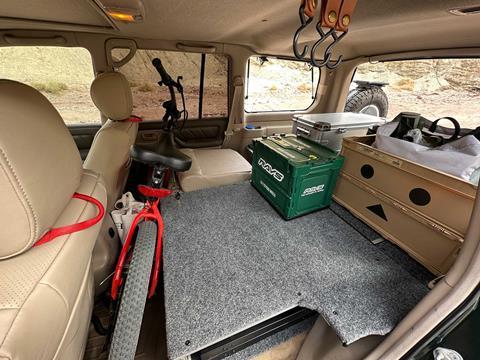
After a few multi-day trips, it became clear that additional room would be useful. Gear had a way of piling up, and packing around the rear seats often meant compromises. We eventually removed the second-row seats and ran the truck that way for about a year and a half.
Since the Land Cruiser’s rear seat is a 70/30 split, we occasionally reinstalled the smaller single seat to carry one passenger, but for the most part, the truck proved more practical without rear seating at all. Access was easier, packing was more efficient, and day-to-day use improved.
As the OVR LC100 continued to evolve, we finally acted on the advice we’d been given from the start. Our Land Cruiser cargo platform was a go.
We worked with Al Catolos of Sponsored by Wifey (the first person that gave us said advice) to build a dedicated rear cargo floor for the Land Cruiser.
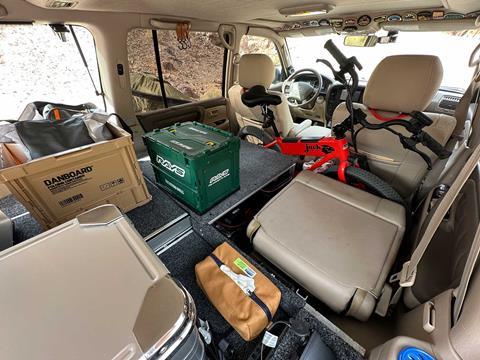
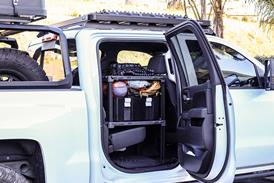
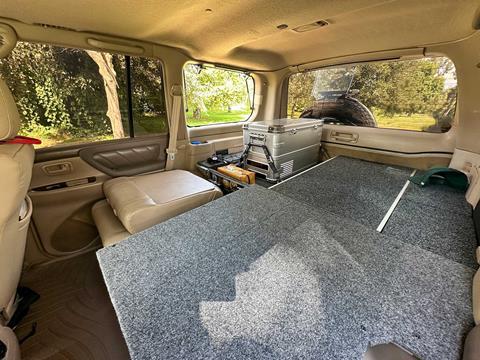
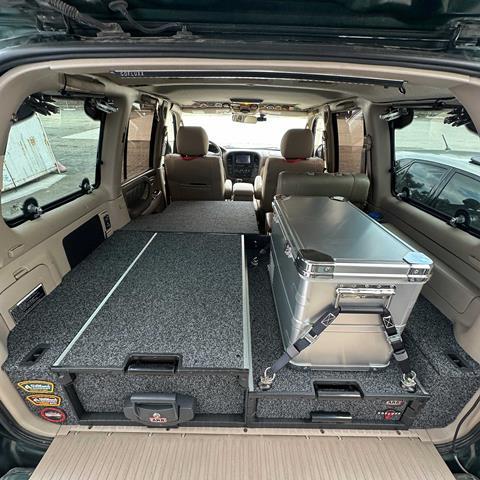
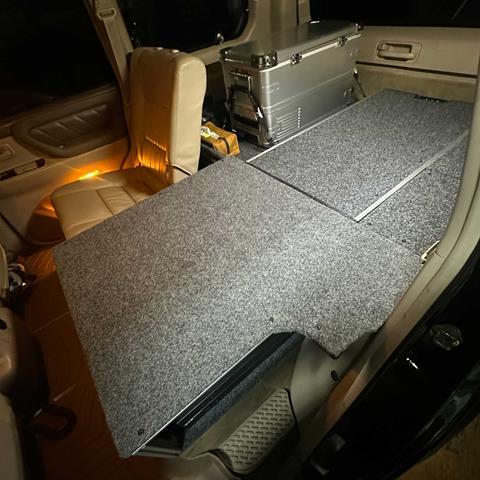
We kept the narrow single rear seat but removed the larger two-passenger section, replacing it with a flat deck that includes storage underneath.
The result is a much larger and more usable cargo area that extends forward to just behind the front seats, while still allowing us to carry up to two passengers when needed.
Custom Cargo Platform Build: Aluminum Frame with Integrated Storage
The Sponsored by Wifey platform itself uses an aluminum frame with a wood deck that’s covered in marine-grade carpet to better match our ARB drawer system. The flat surface works equally well as an in-vehicle sleeping platform or as flexible cargo space, depending on the trip.
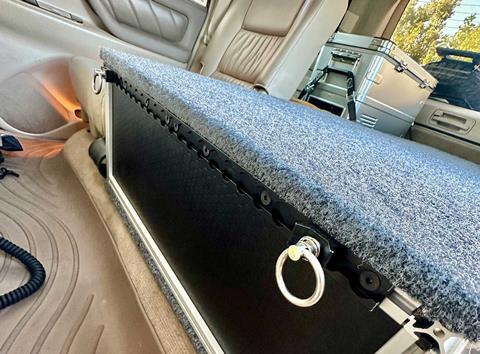
We added L-track along the front edge of the platform so cases and bags can be securely tied down using quick-detach rings and straps, making it easy to reconfigure the space as needed.
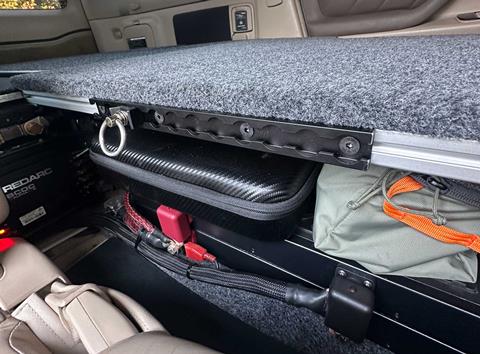
The removal of the rear seats created enough room beneath the platform to house the double-stacked KC lithium batteries, Redarc components, and additional gear.
Hidden Storage Solutions: Maximizing Capacity Under the Platform
This storage cubby also serves as a convenient place for items we want easy access to, including our Starlink Mini, drone, tire air-down hoses, and other frequently used equipment.
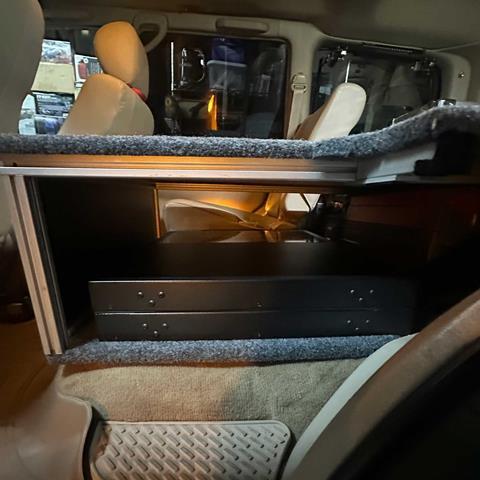
After six months of living with the expanded platform and cargo area, we’re very satisfied with how it’s worked out. The added space gives us all the cargo room we need, along with a secure and well-integrated home for the expanded house battery system.
With the single second-row seat still in place, we also retain the ability to bring along an additional passenger when needed.
Upgrading to a Four-Battery Electrical System for Extended Overland Travel
With the seats removed, the newly opened space also presented an opportunity to rethink our onboard power system.
While our previous dual AGM battery setup worked fine for short trips, it didn’t offer the electrical capacity or flexibility we wanted for extended overland travel to remote locations. Between refrigeration, Starlink use, camera gear, lighting, eBike charging, and daily device charging, its limitations became clear.
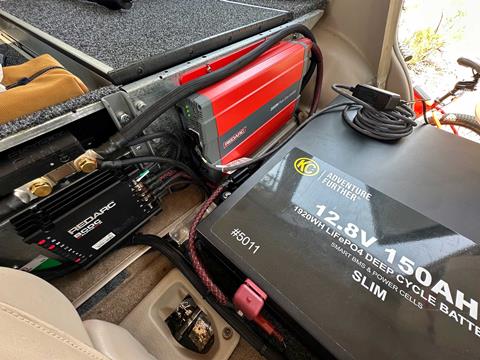
Rather than replacing the original system, we expanded it. Following Catolos’ advice, we left the factory-based dual AGM setup intact and added 300Ah of KC lithium batteries, effectively creating a four-house-battery configuration.
Choosing Lithium Over AGM: Why We Upgraded Our House Battery System
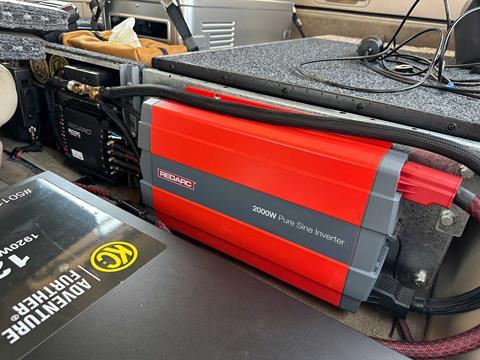
Catolos helped us install a significantly upgraded electrical system that includes a Redarc BCDC Alpha50 R 12V 50A DC-DC charger, a Redarc 2000W pure sine wave inverter, and two KC HiLites 150Ah flat lithium batteries.
If you’ve never seen these batteries before, it’s because they’re still prototypes and not yet available to the public. We were asked to test them under real-world conditions and were happy to do so.
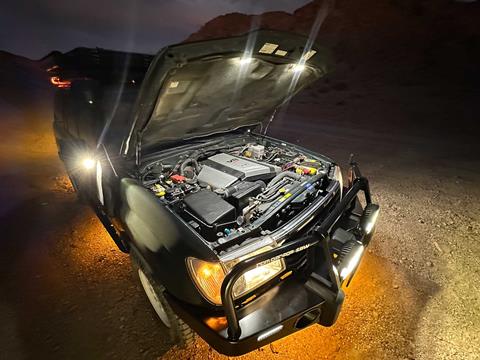
The original Optima YellowTop AGM battery and Redarc BCDC1225D charger, both located in the engine bay, continue to handle external loads such as the KC HiLites Flex Era 1 ditch, rock, and chase lights, along with the ARB air compressor.
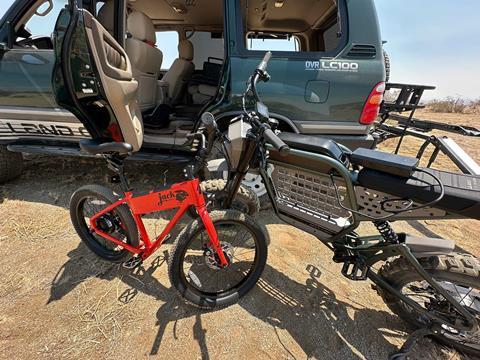
The interior-mounted KC lithium batteries and larger Redarc inverter now support our plug-in accessories inside the vehicle. This includes the Iceco APL35 fridge, Starlink Mini, eBike charging, and high-draw electronics used during extended trips. The power system upgrade was greatly appreciated.
Thanks to the increased output and capacity of the system, we also gained the ability to run a fully electric camp kitchen. That setup includes a microwave, air fryer, and induction burner.
While we still carry a gas-powered stove, having the option to rely on electric cooking adds flexibility and convenience at camp—an expanded capability that we’ve come to appreciate. The power system upgrade made that possible.
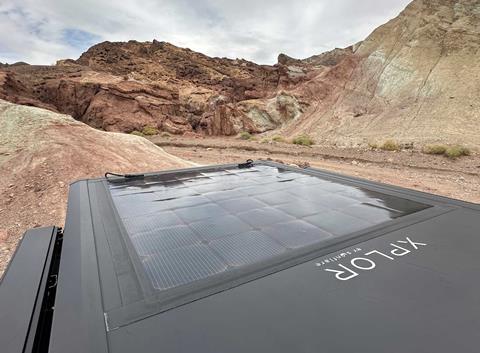
To help maintain the system, a Sunflare Xplor FLEX+ 115W solar panel is mounted on top of the rooftop tent. The panel provides supplemental charging whenever the vehicle is parked in sunlight—even indirect light—helping keep the house batteries topped off during longer stays.
Some might call this auxiliary electrical setup overkill for an SUV, but in practice, it’s been one of the most useful upgrades we’ve made.
It’s also fair to say that this change nudges the OVR LC100 beyond its original “budget build” label—but there are certain areas where spending more pays off every time you’re on the road.
Is a Cargo Platform Right for Your Land Cruiser Build?
The truth is that in nearly three years of owning the Land Cruiser, we’ve never truly needed to carry more than three people—and most trips involve only one or two. Your mileage may vary.
If you travel with family or regularly bring along multiple passengers, a platform setup may not make sense. But if you mostly travel solo or as a pair, our advice now matches what we were told at the beginning: start with a cargo platform layout from day one. An electrical power upgrade is higly recommended as well.
Whether you’re building a Land Cruiser–or other vehicle–for weekend adventures or extended expedition travel, consider your actual usage patterns before finalizing your cargo and electrical system configuration.
We’ll follow up with detailed reviews and go more in-depth with many of the accessories outlined in this article, so be sure to stay tuned and continue following along with the OVR LC 100 vehicle project series of articles. You can access them in the link below.
Read More About the OVR LC100 Project Build by Clicking Here!
For more informative articles like this, consider subscribing to OVR Magazine in print or digital versions here. You can also find the print edition of OVR at your local newsstand by using our Magazine Finder.




No comments yet