







California’s new replacement tire efficiency program has drawn alarm from the off-road community, but the regulations are more targeted than the headlines suggest. Here’s a clear-eyed look at what’s actually changing, what’s exempt, and where the real uncertainty lies for truck and overland vehicle owners.
California’s New Tire Rules: What They Mean for Off-Road and Overland Vehicles
California has approved new efficiency standards for replacement tires, prompting headlines suggesting that the state is effectively banning certain aftermarket and off-road tires. The reality is considerably more nuanced—particularly for truck, SUV and overland vehicle owners.
California’s Replacement Tire Efficiency Program, approved by the California Energy Commission in August 2026, establishes minimum rolling-resistance standards for replacement tires beginning in 2029, with more stringent requirements following in 2033.
For drivers of stock passenger cars, the change may largely go unnoticed. For owners of modified trucks, SUVs, Jeeps and overland vehicles, however, the regulations are worth watching.
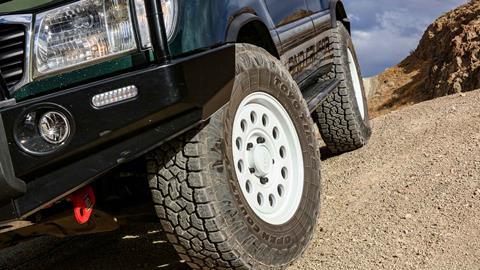
Tire choice is a major part of configuring a vehicle for off-pavement use, and aggressive all-terrain and mud-terrain tires traditionally trade some rolling efficiency for characteristics such as deeper tread, stronger construction and improved traction.
The good news is that California’s new regulation includes a number of exemptions that should keep many of the tires commonly found on heavily modified off-road vehicles outside the new requirements. The less certain area involves the more moderate all-terrain tires used on daily-driven trucks and SUVs.
What California’s Replacement Tire Efficiency Program Actually Regulates
The Replacement Tire Efficiency Program focuses primarily on rolling resistance—the amount of energy lost as a tire rolls down the road. Lower rolling resistance can improve gasoline fuel economy as well as driving range in electric vehicles.
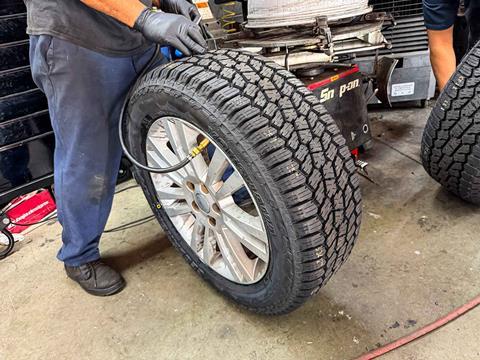
According to the California Energy Commission, replacement tires are currently less efficient on average than the original-equipment tires installed by automakers. The new program is intended to bring the average efficiency of replacement tires closer to that of OE tires while also maintaining minimum wet-grip requirements.
The CEC estimates that the regulations could eventually save California drivers nearly $1 billion annually in fuel and electricity while reducing carbon dioxide emissions by approximately 2 million metric tons per year. The state estimates the additional manufacturing cost at approximately $1.50 per tire during the first phase and $6.50 once the second phase is fully implemented.
Those numbers are less important to most off-road enthusiasts than a more basic question: Will the tires we currently use still be available?
In many cases, yes.
Why California’s Tire Rules Are Not a Ban on Off-Road Tires
One important distinction has been lost in some of the discussion surrounding the regulation: California has not banned aftermarket tires, nor has it universally prohibited aggressive off-road tires. Despite headlines suggesting a California mud-terrain tire ban, the regulation does no such thing.
The CEC specifically lists numerous specialty categories that are excluded from the minimum efficiency requirements. These include deep-tread tires, tires designed for ATVs and dedicated off-road vehicles, large off-road tires, competition tires, high-load-index tires, winter tires and limited-production tires, among others.
That distinction matters for OVR readers.
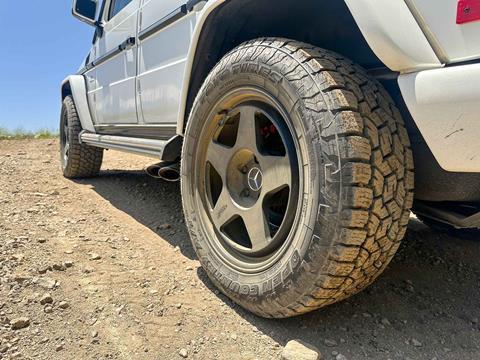
The regulatory documents define a deep-tread tire as one having at least 18/32-inch tread depth. They also exclude tires with a load index of 122 or greater. A tire’s load index is the numerical rating that indicates how much weight it can safely carry at its specified inflation pressure.
Those specifications overlap with a significant portion of the LT tires used on larger trucks and heavily equipped overland vehicles. A 35- or 37-inch LT tire designed for substantial load capacity, for example, may fall under one or more California exemptions depending on its individual specifications.
The regulation therefore shouldn’t be interpreted as saying that California residents will no longer be able to buy 35-inch tires, mud-terrains or other popular off-road sizes.
Tire size alone doesn’t determine whether a tire is affected.
The Gray Area: All-Terrain Tires on Daily-Driven Trucks and SUVs
Where things become more interesting is with the growing number of trucks and SUVs running less aggressive all-terrain tires.
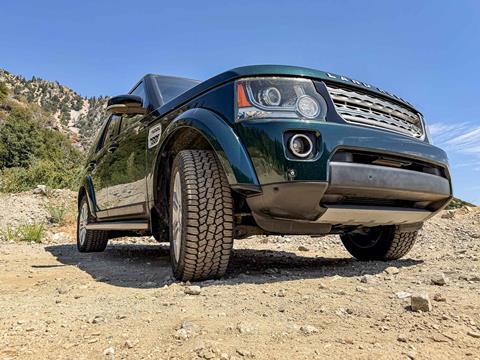
Modern overlanding has created a sizable market for tires intended to perform well on pavement while still providing increased traction and durability on dirt, gravel and moderate trails. Many of these tires use shallower tread depths and lower load ratings than traditional heavy-duty LT mud-terrain tires.
Those tires may not automatically qualify for one of California’s specialty exemptions.
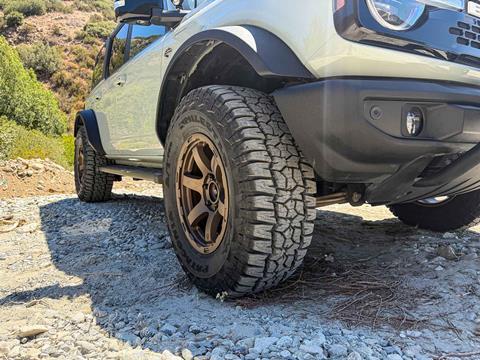
That means a P-metric or lighter-duty LT all-terrain tire fitted to a daily-driven Toyota 4Runner, Ford Bronco, Jeep Wrangler, Land Rover, Subaru or midsize pickup could potentially be subject to the new all-terrain tire regulations.
It does not necessarily mean those tires will disappear.
Manufacturers have until 2029 before the first tire rolling-resistance standards take effect, and the regulations do not fully phase in until 2033. The CEC says compliant replacement tires already exist and manufacturers have several years to redesign products that currently fall outside the standards.
For tire companies, that could mean developing compounds and construction methods that reduce rolling resistance while retaining the durability and traction expected from an all-terrain tire.
Why Heavily Modified Overland Vehicles May Face Fewer Restrictions
Interestingly, more extensively modified overland vehicles could have fewer concerns than lightly modified daily drivers.
A heavy full-size pickup running high-load-index 35- or 37-inch LT tires may qualify for an exemption while a crossover or midsize SUV using a relatively mild all-terrain tire may not.
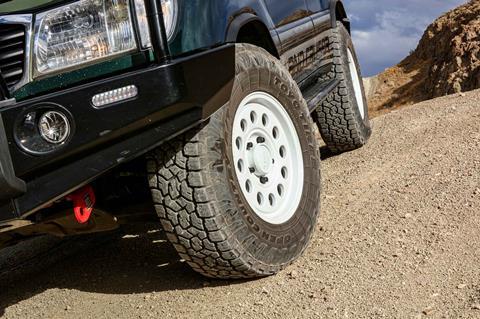
Likewise, certain aggressive tires with tread depths of 18/32 inch or greater could qualify for the deep-tread tire exemption and therefore sit outside the program’s minimum performance requirements.
This makes broad statements about California “banning off-road tires” misleading. The actual effect will depend on the specifications and classification of each tire rather than simply whether it is marketed as an all-terrain or mud-terrain.
Can You Buy Tires Online to Avoid California’s Efficiency Rules?
The rules are centered around replacement tires sold for use in California rather than simply tires sitting on the shelves of California tire stores.
The regulatory language includes tires offered through internet, mail-order and telephone sales when they are intended for use in the state.
That means ordering a noncompliant tire online from an out-of-state retailer may not provide a simple workaround once the regulations are enforced. Exactly how interstate sales and enforcement will operate in practice should become clearer as implementation approaches.
Popular Off-Road Tires That May Already Meet California’s Exemptions
California’s new rules don’t necessarily mean today’s popular off-road tires are headed for extinction. In fact, a number of tires currently on the market appear to fall outside the Replacement Tire Efficiency Program based on exemptions for tires with at least 18/32-inch tread depth or a load index of 122 or greater.
The following tires appear to qualify for an exemption in at least some current sizes based on their published specifications.
The Milestar Patagonia M/T-02, for example, is offered with 19/32-inch tread depth, while the Yokohama GEOLANDAR X-MT in 35x12.50R17 measures 21/32 inch. Nitto’s Trail Grappler is another example, with many popular truck sizes carrying 21/32-inch tread depth.
Toyo’s Open Country R/T Pro also crosses the deep-tread threshold in several off-road sizes, including the 35x12.50R17LT at 19.9/32 inch. Larger versions can qualify under the load-index exemption as well.
Perhaps more interesting are tires that aren’t especially deep but still appear to be exempt because of their load ratings. Several Nitto Ridge Grappler sizes, including LT265/65R18 and LT265/70R18, carry load indexes of 122 or higher despite having approximately 13.5/32-inch tread depth. Similarly, larger Recon Grappler sizes commonly carry load indexes in the mid-120s.
Hankook also offers current tires that appear to fall under the exemptions. The Hankook Dynapro XT in 35x12.50R18 carries a 128 load index, while the 37x12.50R17 is rated 124. The Dynapro AT2 Xtreme 35x12.50R18 is also rated 128. Interestingly, the corresponding 35x12.50R17 versions carry a 121 load index, illustrating why exemption status can vary within the same tire line depending on size.
That means some heavy-duty 35- and 37-inch tires may actually have little to worry about under the new regulations. The bigger question surrounds lighter-load, less aggressive all-terrain tires used on daily-driven SUVs and midsize trucks. Those are more likely to fall below both the 18/32-inch tread-depth threshold and 122 load-index cutoff, potentially making them subject to California’s efficiency standards beginning in 2029.
The important takeaway is that California isn’t regulating tires simply by whether they are labeled A/T, R/T or M/T. Compliance will depend on the specifications of each individual tire and size.
What California Truck and Overland Vehicle Owners Should Do Before 2029
For the moment, nothing changes.
California’s first efficiency requirements don’t begin until 2029, leaving almost three years for manufacturers, retailers and regulators to work through the details. The second and more stringent phase doesn’t arrive until 2033.
If you’re shopping for tires today, there’s little reason to alter a build around regulations that won’t begin for several years.
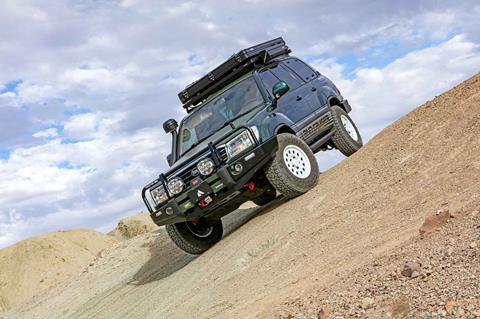
What the off-road community should watch is how manufacturers respond, particularly in the popular middle ground between passenger-car tires and extreme off-road LT tires. Tires designed for daily-driven Broncos, Wranglers, 4Runners, Tacomas and similar vehicles may ultimately be where the regulations have their greatest influence.
By the time the rules take effect, many existing tire lines could simply be updated to meet the new efficiency targets.
California’s tire rules are therefore less of an immediate ban than a change in the standards tire manufacturers will have to design around. For dedicated off-road tires and larger truck applications, the exemptions appear significant. For moderate all-terrain tires, there are still questions worth following.
For overlanders, the takeaway for now is straightforward: the tire aisle isn’t disappearing, but in California it may look somewhat different a few years from now. The Replacement Tire Efficiency Program could influence how manufacturers design some future all-terrain tires, but the exemptions built into California’s tire efficiency standards mean many dedicated off-road and heavy-duty LT tires may remain largely unaffected.
Want Your Voice Heard?
California’s Replacement Tire Efficiency Program has now been approved, but implementation doesn’t begin until 2029. Truck and off-road enthusiasts who have concerns can still follow the CEC’s Replacement Tire Efficiency Program docket and submit comments during future proceedings or proposed revisions. California residents can also contact their state Assembly member and senator to express concerns about how the regulations may affect replacement-tire availability.
Perhaps most effectively, owners can support industry organizations and tire manufacturers participating in the regulatory process. Technical feedback from companies that actually design, test and sell off-road tires can help regulators understand why factors such as tread depth, load capacity, durability and off-road traction don’t always align neatly with low rolling resistance.
Stay Up to Date With the OVR Trailhead Newsletter
The OVR Trailhead brings you relevant vehicle-based adventure stories and offers direct to your inbox. Join the OVR community today!





No comments yet