



Driving to Tuktoyaktuk, Northwest Territories — the only place in North America where a public highway meets the Arctic Ocean — demands serious preparation, a properly built rig, and the right mindset. OVR Feature Editors Andy and Mercedes Lilienthal share everything they learned across 8,898 miles and 25 days on some of North America’s most unforgiving roads.
Traveling 9,000 Miles to the Arctic Ocean and Beyond: An Exploratory Tale of Dirt, Proper Prep, and Lessons Learned
My husband and fellow OVR Feature Editor, Andy Lilienthal, and I, love to travel. We’ve driven to the northernmost point in Europe and around the Baltic Sea to the tune of nine countries in 16 days, generating 4,771 miles with an all-electric camper van.
We’ve trekked across the United States in a modified Subaru, conquering the entire east-to-west coast TransAmerica Trail in 29 days averaging 25 miles per hour racking up 7,163 miles.
We’ve even challenged ourselves to drive to the Arctic Ocean and deep into Alaska multiple times—above Arctic Circles in the dead of winter and summer as part of the Alcan 5000 Rally.
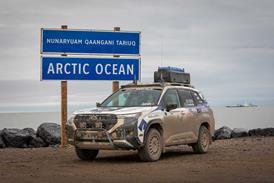
This year we dared to do a 9,000-mile trek to Tuktoyaktuk, Northwest Territories, Canada to see the Arctic Ocean in a non-frozen format.
We then drove deep into Alaska, discovering stunning vistas and remote tracks as we pressed south, driving back home to Oregon.
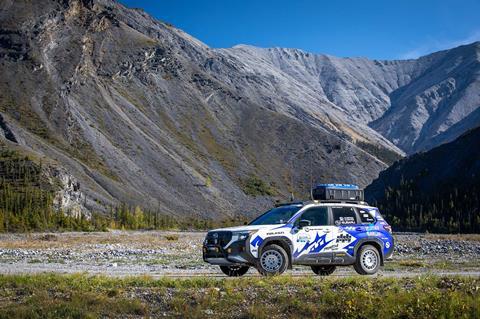
We share how we prepared for this epic trip, what we learned, and a bit about our adventure.
Why We Keep Returning to Northern Canada and Alaska
Andy and are originally from the Midwest (though we’ve in Oregon for 20 years). We’re used to the frozen tundra and weather that’s trying to kill you in the winter. We’re drawn to remote areas that offer magical aurora borealis, kind people, and challenging roads.
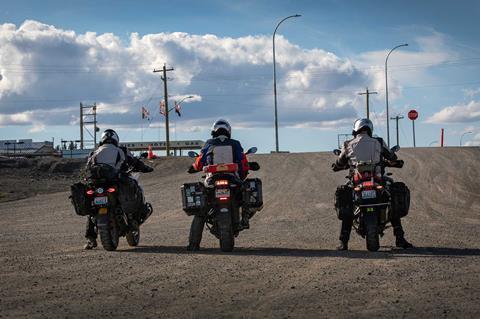
We first discovered northern Canada in winter of 2020 and keep going back. Each trip has given us different experiences and challenges. But the thrill of the great “up north” continues to allure us.
Our Arctic Road Trip Route: Tuktoyaktuk, the Dempster Highway, and Alaska
This trip started near Seattle and went through most of British Columbia to Yellowknife, the capital of the Northwest Territories. We checked it out on foot, including Old Town, and drove the Ingraham Trail, too.
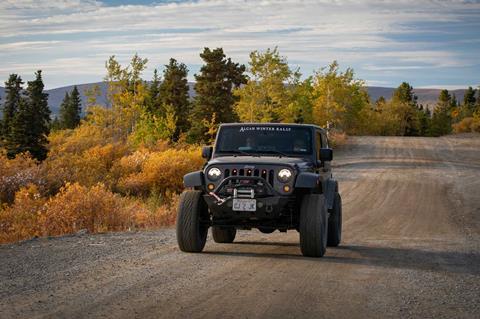
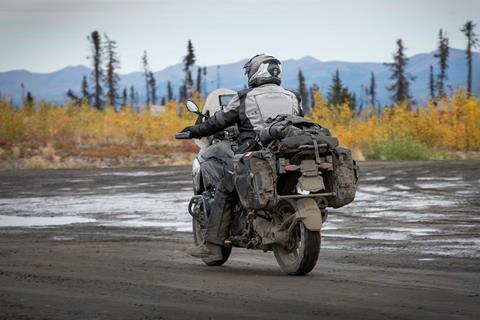
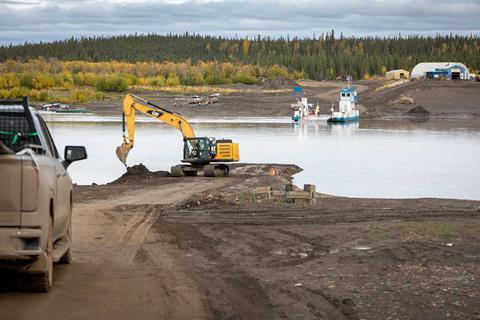
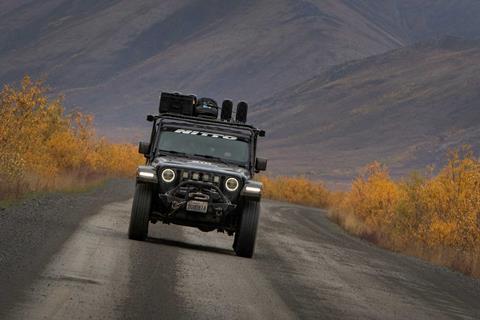
We then drove through Whitehorse to Carmacks and then made our way all the way up to Inuvik via the daring dirt road that is the Dempster Highway which required two ferries. Neither ferry runs 24/7. Plan for road conditions and ferry times accordingly.
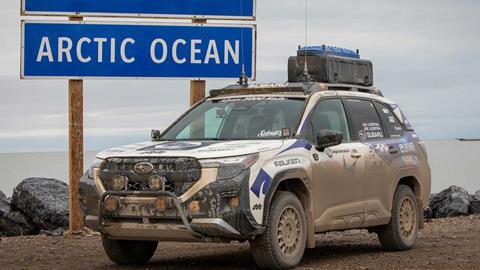
Once in Inuvik, we walked the town and made our way to Tuktoyaktuk the next day. Tuk, as it’s otherwise known, is the only place in North America to drive a public highway to the Arctic Ocean. I took a dip in the frigid water.
After leaving Tuk and Inuvik, we made miles to Dawson City. Afterward, it was to Tok, Alaska, where fellow friends, the Bowman family, and us executed an important mission.
We, along with some other participants of the Alcan 5000 Rally, helped raise $5,310 for the small community ravaged by the Mukluk Fire.
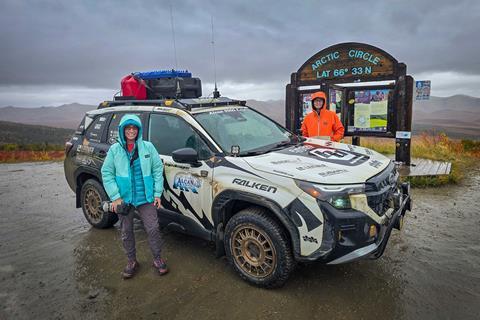
There may also be an additional $15,000 donation because of our efforts! The collective donations were split in between a general fund and those building tiny homes for displaced families.
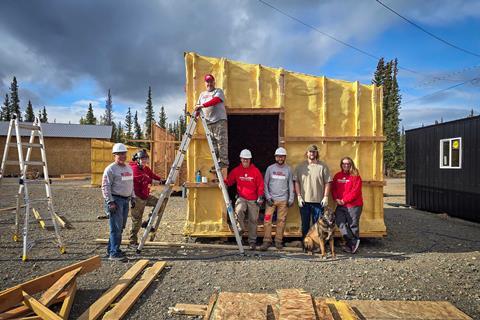
We visited Team Rubicon, who were building homes in various stages of construction. Our hearts were full, helping small communities we’ve regularly frequented in years past.
After Tok, we delved deeper into Alaska, staying in Fairbanks, doing part of the Dalton Highway and making our way south to discover towns we’ve never visited (more on that in a future article).
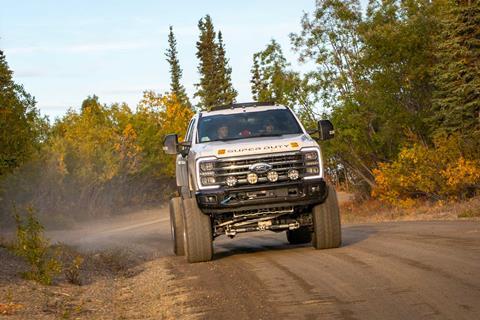
Our grand Arctic adventure totaled 8,898 miles in 25 days. We carefully prepped for this trip. Even after multiple excursions up there, we kept learning and piloted a properly equipped vehicle for it.
Calcium Chloride and Mud: How Northern Roads Affect Your Vehicle
Many far northern dirt highways are treated with calcium chloride. The compound suppresses dust and stabilizes dirt and gravel roads by drawing moisture from the air to compact the surface.
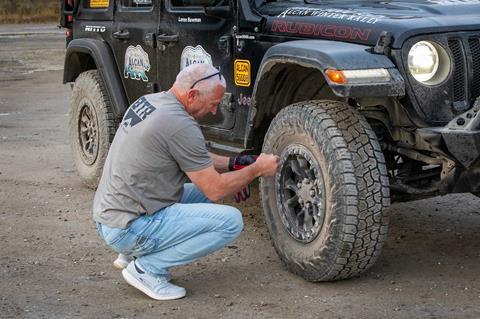
While it helps harden roads and keeps dust down, it’s corrosive and hardens dirt onto your vehicle especially when it’s raining.
We’ve experienced this before, even having taken a credit card to clean brake lights off so others can see them.
If you’re traveling up there and notice a shimmy in your steering wheel, dirt may have accumulated on the wheel barrels that needs attending to.
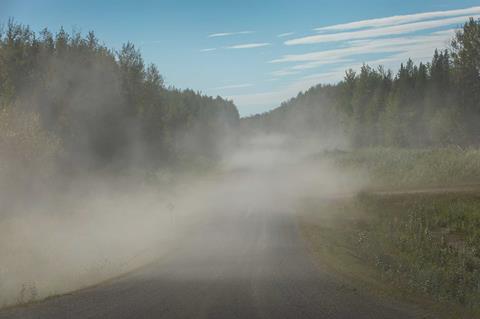
This year, we needed to remove all four wheels and pressure wash them to get a thick ring of hardened dirt/rock off of each wheel’s interior.
The northern roads are hard on vehicles. Proper care and maintenance go a long way!
Preparing for Remote Northern Roads: Fuel, Spares, and Supplies
It’s important to do a thorough vehicle check before you go. Top off fluids and bring extra, too. A jerry can of fuel is critical. We’ve used auxiliary fuel nearly every time we’ve been up there.
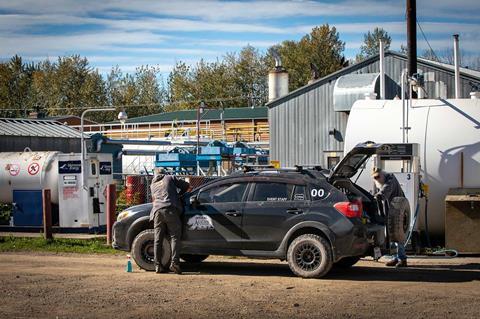
Extra wiper fluid, key spare parts plus, spare tire plus a tire patch kit, and equipment to change a flat tire is paramount to the trip’s success.
Note: Everyone helps each other on remote roads. Stop and check on people. Road graders are the lifeblood of the north.
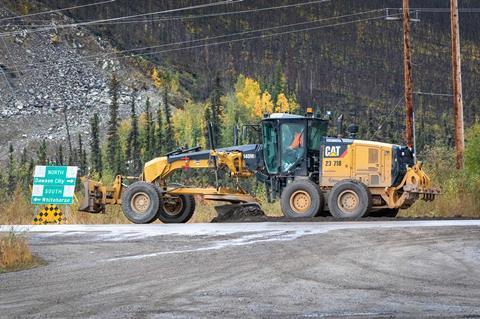
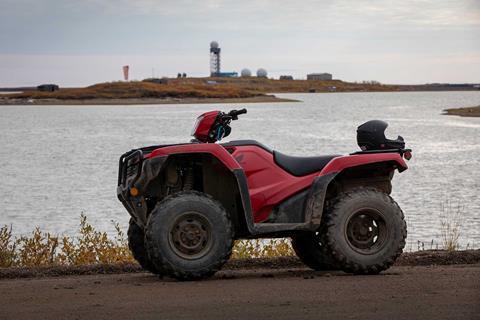
They maintain roads, yank stranded vehicles out of ditches, and pull stuck semis up-and-over steep inclines. Many locals use ATVs, or other vehicles to get about.
Allow extra time and bring additional supplies. If you miss the last ferry on the Dempster, you’ll be sleeping in your vehicle. Someone may run out of fuel. Conditions may make your five-hour trek 11 hours or more.
Pack more food, water, and fuel than you think you’ll need. Bring a toolkit, warm clothing, rain gear, and emergency communications, too.
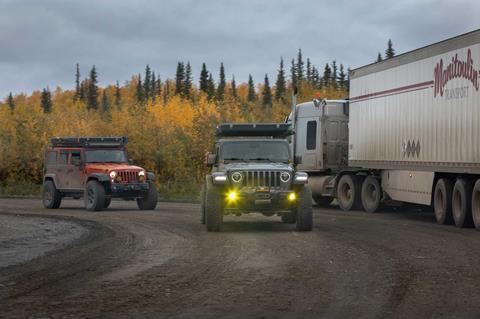
Truckers typically own the roads up there. Give them a wide berth when passing. Be extra courteous and careful near them and help them if they’re stopped in need of aid.
We believe in “road karma.” Rack up the points. Someday it could be you that needs help.
Our Arctic Travel Rig: A Modified Subaru Forester Wilderness
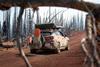
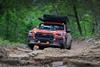
A properly built vehicle is key for up-north travel. Andy and I piloted a modified 2026 Subaru Forester Wilderness built by California-based Rally Innovations and the Zenspeed car club of Valencia High School in Placentia, CA.
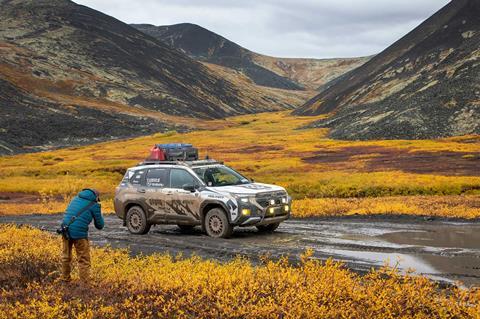
We incorporated several upgrades, including a co-designed all-new prototype ACS ROOF Platform Rack from Leitner Designs and Rally Innovations. This housed a Leitner storage pod, MAXTRAX MKII recovery boards, a Starlink Mini for communications, and five gallons of fuel.
Over the 9,000-mile trek and beyond, this setup never flinched. It’ll be on sale soon!
We also employed Oregon-based Primitive Racing for their beefy front, mid, and rear skid plates. We’ve run Primitive’s products for years and have had outstanding underbody protection no matter the terrain we threw at them.
Baja Designs was chosen for their premium-quality LED auxiliary lights which covered every angle of our Forester Wilderness. Their lumens went far and wide during torrential rain on Canada’s worst roadways.
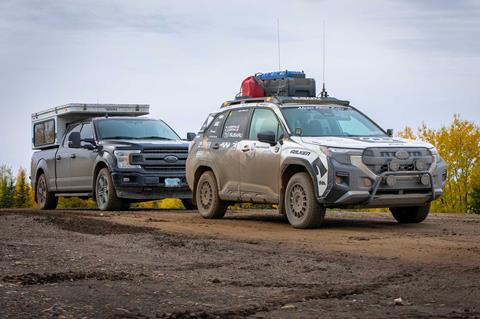
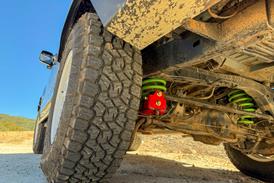
We employed two different colored Black Rhino 17x8 Voll Wheels which kept us steadfast during the entire trip. Lightweight and durable, they gave us zero issues no matter the terrain we threw at them.
We also enlisted the help of Subaru of Las Vegas in case anything needed attending to before or after our trip. They’ve been instrumental in making sure our Subaru Forester Wilderness and us were taken care of.
Other upgrades include:
-
Falken Tires: Wildpeak A/T Trail tires
-
Frank’s Auto Service: service & maintenance
-
K&N Engineering: AEM air intake kit
-
MAXTRAX: MKII vehicle recovery boards
-
Optima Batteries: YellowTop battery
-
PRP: interior storage bags
-
R1 Concepts: slotted rotors and brake pads
-
RokBlokz: mud flaps
-
Rolotech Car Wraps: vinyl vehicle wrap
-
Scrubblade: replacement wiper blades
-
Shop TPMS: tire pressure sensors
-
sPOD: Source LT w/ Mini 6 Switch Controller
-
SpeedStrap: fuel can strap
-
Gorilla: tuner-style black lug nuts
Lessons From 25,000 Miles of Travel in the Far North
No matter when you go, if you’re a seasoned overlander or new adventurer, research and preparedness is key.
After 25,000+ plus miles in the far north, we’ve navigated treacherous conditions at -47° F and much more. We’ve helped countless people as others helped us.
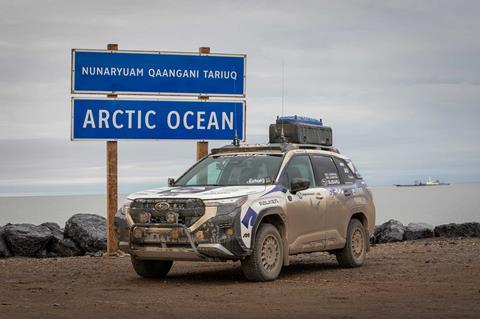
It’s all about community and giving back no matter where you are. Whether it is near the Arctic Ocean or somewhere way beyond, it’s important to be prepared, patient, and anticipatory of an epic adventure ahead while being willing to help others along the way.
More Images from the Road
Access More Great Stories!
For more informative articles like this, consider subscribing to OVR Magazine in print or digital versions here. You can also find the print edition of OVR at your local newsstand by using our Magazine Finder.




No comments yet