


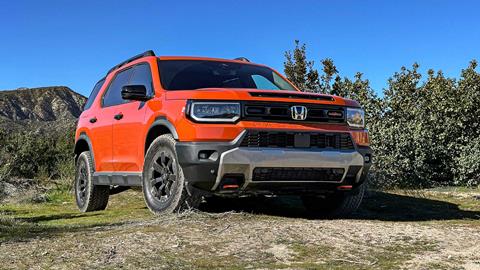
We spent a week with the 2026 Honda Passport Trailsport to answer a question we hear often in the overland space: is this a legitimate adventure-capable SUV, or a soft-roader dressed up for mall parking lots? From daily errands to mountain trails, we put the Sunset Orange Trailsport through real-world conditions to understand where it fits within the off-road vehicle ecosystem.
We’ve seen what the Passport could do on the Alcan 11-day, 5,000 mile rally, but what is it like to live with it as a daily? After a week with the 2026 Honda Passport Trailsport answered a question we hear often in the overland space: is this a legitimate adventure-capable SUV, or a soft-roader dressed up for grocery runs and mall parking lots?
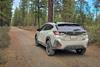
Honda loaned us a Sunset Orange Trailsport, and we used it the way many vehicle-based adventurists would—daily commuting, errands, and of course, time spent on dirt roads and mountain trails.
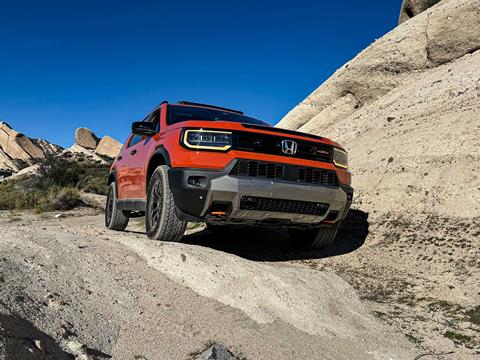
We put the Passport through a range of real-world conditions to better understand where it fits within the off-road-capable vehicle ecosystem.
Model Positioning
The Passport Trailsport rides on a unibody platform, which defines both its strengths and its limits. It isn’t intended to directly compete with body-on-frame SUVs like the Jeep Wrangler, Ford Bronco, or Toyota 4Runner, nor is it designed to serve as the foundation for a dedicated, heavily modified overland build.
Instead, it occupies the space between traditional crossovers and more rugged off-road vehicles, offering enough capability for dirt roads, sand, snow, and mild rock while remaining comfortable and easy to live with every day.
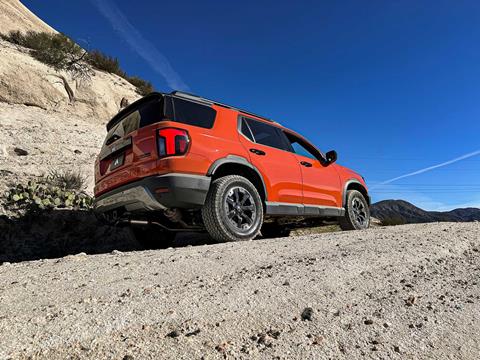
That positioning is one of the aspects we appreciate most about the Passport Trailsport. It doesn’t have a perfect apples-to-apples competitor. In terms of overall size, it’s close to the two-row Jeep Grand Cherokee, but the available trims and off-road intent don’t align exactly with what Honda is doing with the Trailsport.
Subaru’s Outback Wilderness and Forester Wilderness models come closer philosophically, but those vehicles are smaller, less powerful, and approach trail capability from a different angle. The Passport Trailsport ultimately carves out its own niche, blending midsize SUV space, V6 power, and factory-backed trail features into a package that doesn’t neatly fit into an existing category—and that’s part of its appeal.
Sized-Up & Full-Featured
First impressions center on scale and space. The 2026 Passport feels larger than expected, especially from the driver’s seat. This makes sense since its wheelbase has been stretched by as much as 2.7-inches and has over 4 more cubic feet of passenger volume than the outgoing model. The greater size allows the cockpit to feel wide and open, with generous room for both driver and passenger.
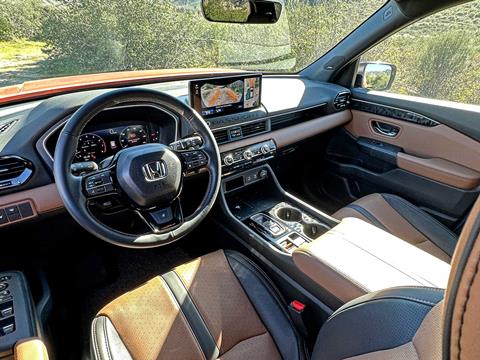

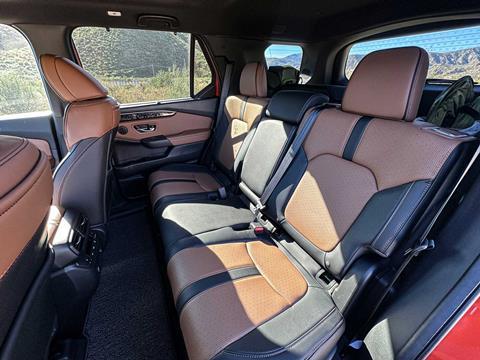
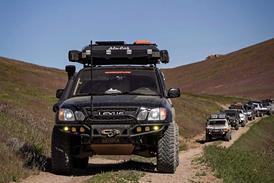
Speaking purely from feel rather than measurements, interior space up front seemed even larger than our generously-sized 100 Series Toyota Land Cruiser and closer to what you’d expect from a heavy-duty-class pickup.
Materials, layout, and feature integration feel modern and well considered, with several touches that clearly borrow from the luxury segment.
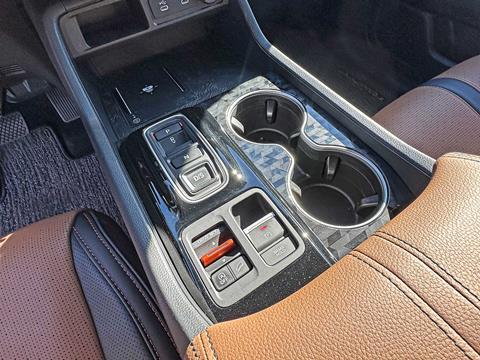
Standard features such as a wireless phone charger, the many storage pockets built into the dash, fit-any-size-cup holders, integrated sunglass holder, and ultra deep center console storage bin were extra useful to us.
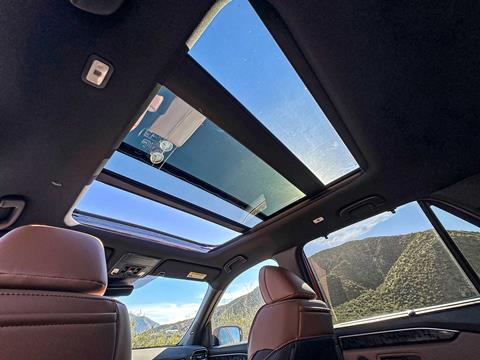
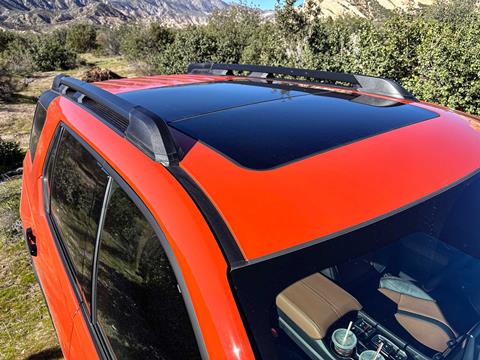
The generously large glass roof allowed plenty of natural light and fresh air in. It can be covered up at a push of a button as well. We did note the absence of a HomeLink garage door opener integrated into the rearview mirror, though it is available as an optional feature.
The Passport’s CarPlay and Android compatible infotainment system strikes a balance between modern functionality and usability. The screen is clear and responsive, but what we appreciated most was Honda’s continued use of physical buttons and knobs for key controls. Volume, tuning, and climate adjustments can all be made without diving into menus, which is especially welcome when driving off pavement or wearing gloves.
Steering-wheel-mounted controls for audio, driver information, and driver-assist functions further reduce the need to take your hands off the wheel, resulting in a straightforward, driver-friendly layout that prioritizes ease of use over unnecessary complexity.
Under the Hood
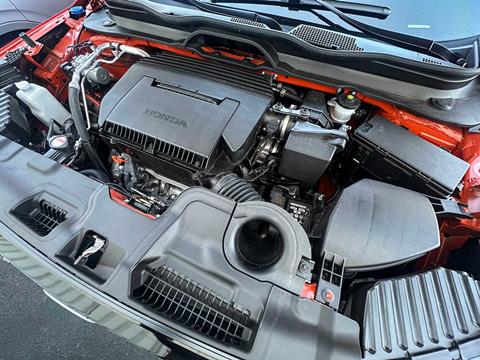
Power comes from a 285-horsepower V6 paired with a smooth-shifting 10-speed automatic transmission. On pavement, the drivetrain is quiet and refined, delivering confident acceleration for highway merging and climbing grades.
The Passport runs on 87-octane fuel, and during longer highway stretches we saw fuel economy climb as high as 25 mpg. Stop-and-go city driving dipped as low as 13 mpg, with our overall average landing at 18.7 mpg across just over 400 miles.
Not exceptional milage, but reasonable compared to many more trail-focused vehicles. We were able to squeeze just shy of 320 miles out of a tank when the refuel light came on.
Off-Pavement Ready
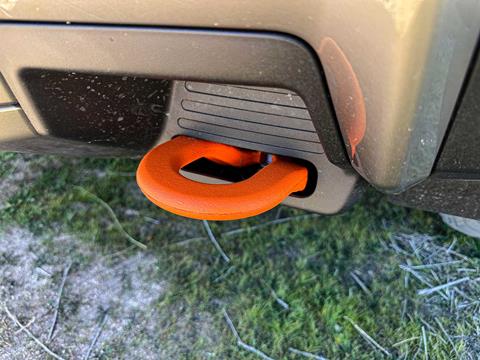
That capability is supported by a thoughtful mix of hardware and software. The Trailsport includes skid plates protecting the front and underside, exposed recovery points, and factory all-terrain tires measuring roughly 31 inches in diameter.
These elements set the foundation for light off-pavement use and give the Passport a more purposeful feel than Honda’s other SUV offerings.
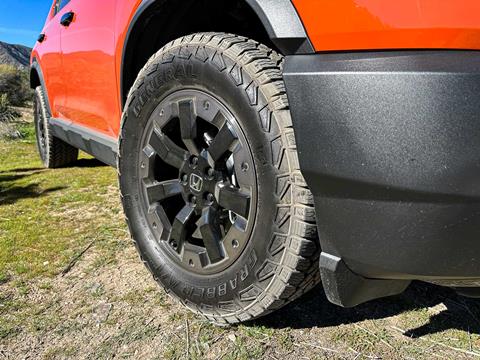
The Trailsport package also benefits from Honda’s full seven-mode drive system, which includes Normal, Econ, Sport, Snow, Tow, Trail, and Sand.
In daily driving, Normal mode delivered smooth, predictable behavior, while Econ softened throttle response to prioritize efficiency during longer highway stretches. Sport sharpened throttle input and held gears longer, which was noticeable when merging or climbing grades, though it’s not a performance mode in the traditional sense.
Off pavement is where Trail and Sand modes stood out. Trail mode recalibrates throttle response, traction control, and torque distribution to better manage uneven terrain and slower-speed obstacles.
It allows enough wheel slip to maintain momentum without letting things get sloppy, which proved useful on rocky and rutted sections of trail.
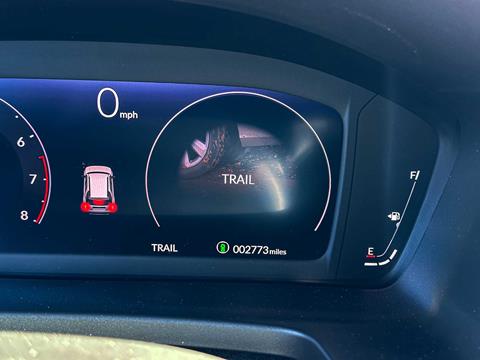
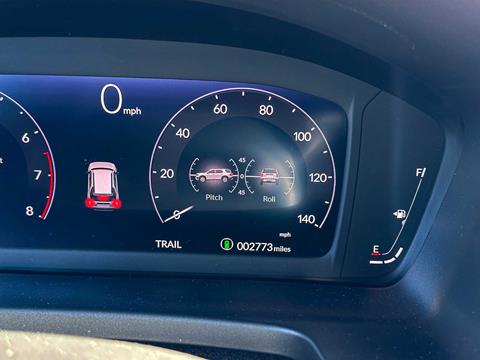
Sand mode was equally effective, permitting more wheelspin and quicker torque delivery to help the Passport stay afloat in loose surfaces rather than digging itself in.
Snow mode softened responses further and prioritized stability, while Tow mode adjusted throttle and transmission behavior to better manage added load, even though we did not have a trailer attached during our testing.
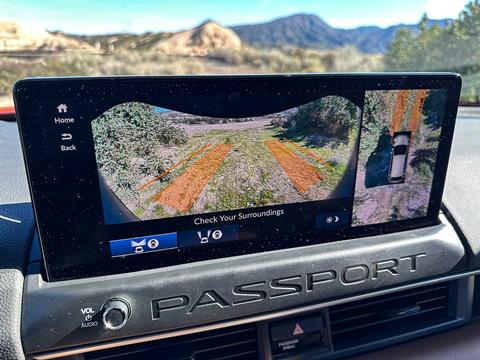
TrailWatch works hand in hand with these drive modes and quickly became one of the Passport’s most useful off-road tools. The system allows the driver to toggle between a forward-facing camera view and side-angle views that show the area near the front tires.
The cameras automatically activate when off-road drive modes such as Trail or Sand are selected, and they can also be engaged manually via a button located at the end of the windshield wiper stalk.
Switching between views is handled by hitting the button on the stalk or through the center display, and the image clarity was good enough that we relied on the system frequently when approaching blind crests, tight brush-lined trails, or rocky sections where tire placement mattered.

Rather than leaning out a window or guessing where the front wheels were tracking when on a solo drive, TrailWatch gave us the confidence to pick cleaner lines and avoid unnecessary contact with rocks, dried brush, and other avoidable obstacles.
Together, the drive modes and camera system don’t turn the Passport Trailsport into a hardcore crawler, but they do make it a more capable and approachable trail vehicle. For adventurists who want technology that supports exploration rather than replacing skill, the system feels well thought out and genuinely useful.
Let’s Go Wheelin’
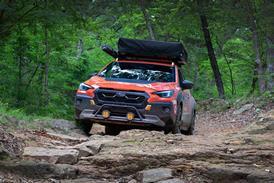
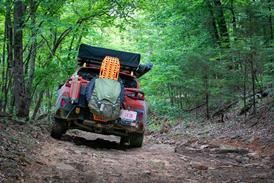
Our hands-on time off pavement reinforced where the Passport Trailsport is most at home. On dirt trails, it rolled along smoothly and confidently, with suspension tuning that absorbed washboard and uneven surfaces without drama.
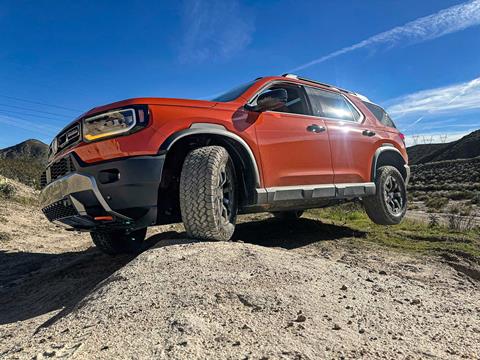
Deep sand washes were where we had the most initial concern about getting bogged down, but engaging Sand mode quickly put those worries to rest.
The system allowed enough wheelspin and momentum to keep the Passport moving forward without digging in, and it carried itself through soft sections more easily than we expected.
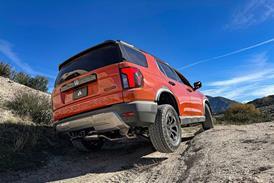
Things became more interesting once we transitioned onto rocky terrain. With 8.3 inches of ground clearance, the Passport is respectably tall for a unibody SUV, but there were moments when a couple of extra inches would have been welcome.
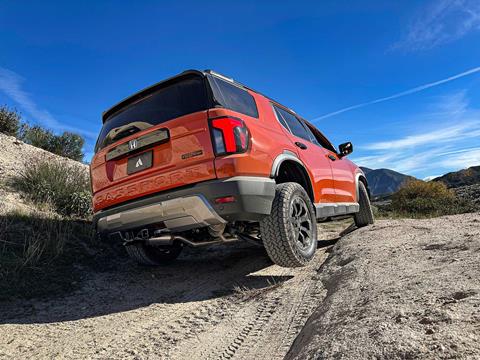
It handled ascents and descents with confidence, though we were deliberate about avoiding more aggressive lines.
Even on relatively mild trails, the underbody protection did see occasional contact, and we found ourselves lifting a wheel—and at times two—off the ground.
Those moments served as a clear reminder of the Passport’s limits, but also highlighted just how much capability it brings to the table for its intended use.
On The Daily
As a daily driver, the Passport Trailsport is genuinely easy to live with. The seating position is high and commanding without feeling truck-like, and the wide cockpit gives both driver and passenger room to stretch out on longer drives.
Heated and ventilated front seats, along with a heated steering wheel, made the cabin comfortable across a wide range of conditions, from cold mornings to warm afternoons.
Brake hold reduced fatigue in traffic and at long stoplights, while rear-door privacy shades helped keep the interior cooler when parked and added discretion when carrying gear.
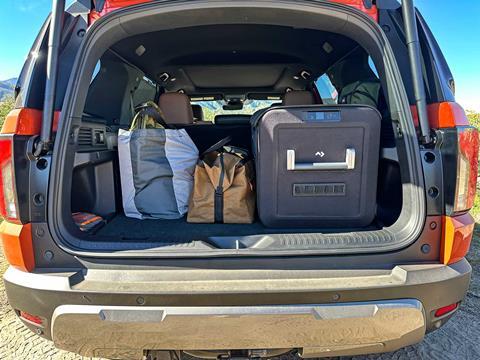
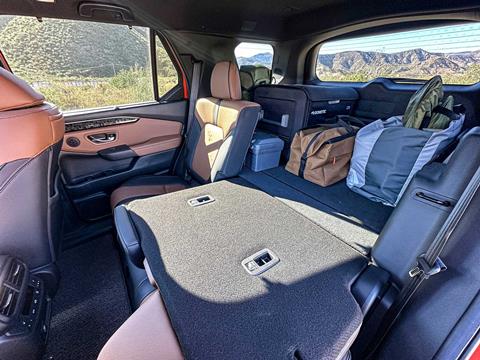
The storage options in the rear cargo area are genuinely impressive. Multiple storage pockets and hidden in-floor compartments make it easy to organize and secure gear, whether for daily use or longer trips that require more equipment.
This flexibility is especially useful for adventurists carrying hiking, camping, fishing, climbing, or cycling gear, where organization and access matter.
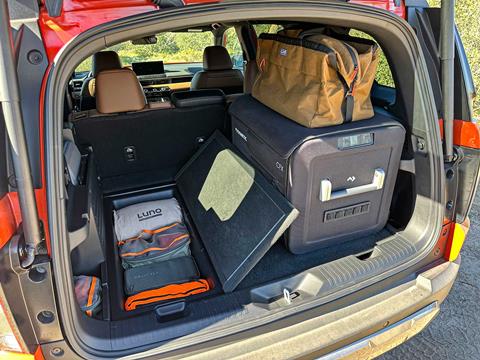
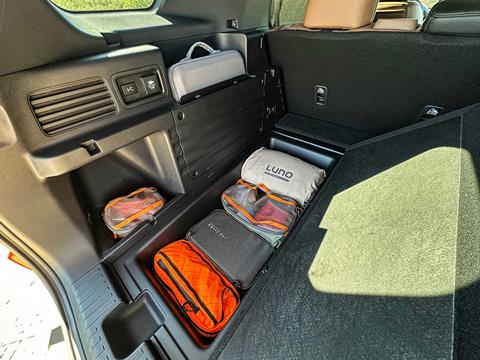
We loaded the Passport with a not-so-small 53-liter Dometic CFX3 55IM fridge along with our usual trail equipment and still had room to spare, underscoring just how usable the Passport’s cargo capacity is for real-world travel.
Road noise is well controlled for an SUV equipped with all-terrain tires, and the suspension tuning strikes a balanced mix of firmness and compliance, making both long commutes and quick errands easy to manage.
Tow Capable
Beyond comfort, the Passport Trailsport brings useful capability for light-duty hauling. A Class III trailer hitch comes standard, and with a 5,000-pound towing capacity, the Passport can handle small utility trailers, lightweight campers, or gear haulers without feeling out of its element.
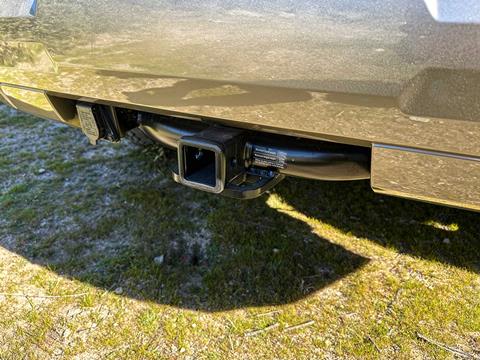
While it’s not intended to replace a full-size tow rig, the combination of its V6 power, stable chassis, and integrated Tow mode makes it a practical option for adventurists who occasionally need to bring extra equipment along for the trip.

Accessories Galore
Honda has also leaned into the Passport’s adventure intent with a deep catalog of factory accessories that expand both its off-road readiness and day-to-day usability.
For those planning more serious trail excursions, available rock sliders, additional scuff plates, and a full-size spare tire add meaningful protection and peace of mind when traveling farther from pavement.
At the same time, Honda hasn’t ignored the interior, offering clever add-ons like the cargo shelf that converts into a table—an especially useful feature for campsite meals or quick stops on the road.
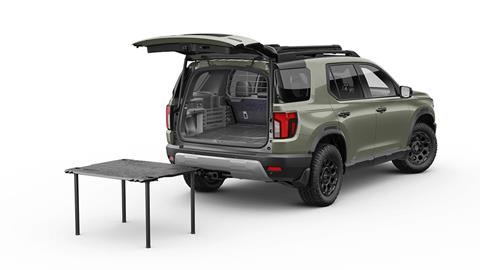
These thoughtful accessories recall the kind of creative, enthusiast-friendly options Honda once offered for vehicles like the Element, blending practicality with a bit of personality.
It’s this mix of functional trail gear and smart interior solutions that helps make the Passport feel approachable and endearing, especially for buyers who appreciate factory-backed options designed to support how they actually use their vehicles.

Final Thoughts
The Passport Trailsport isn’t a body-on-frame truck, and comparisons to traditional overland staples miss the point. What it is, however, is a spacious and comfortable two-row SUV that’s genuinely capable for occasional off-pavement travel.
With a starting MSRP of $48,450, it sits in a competitive space for buyers who want a well-equipped, trail-ready daily driver without stepping into full-size or body-on-frame territory.
For adventurists who need one vehicle to handle everyday life and still support weekend trail access and camping trips, the 2026 Passport Trailsport makes a strong, realistic case.
HRC Passport Concept — A Look Ahead
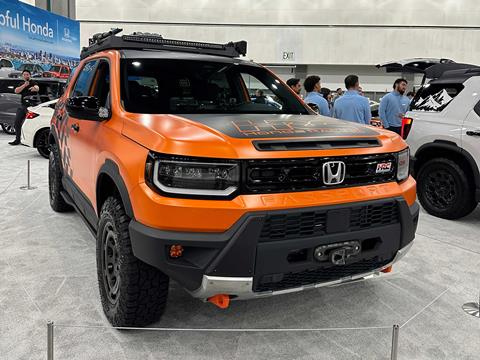
At the LA Auto Show, we spotted a Honda Passport built by Honda Racing Corporation that stopped us in our tracks. This HRC Passport leaned hard into off-road intent, showcasing a collection of purpose-built components developed by Honda’s racing division.
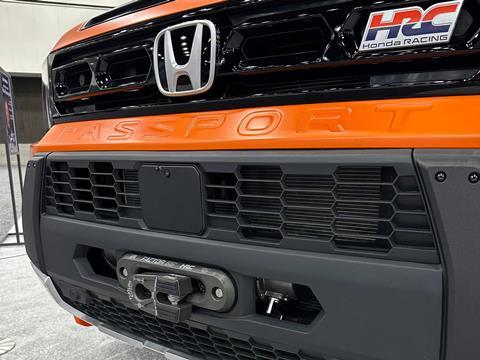
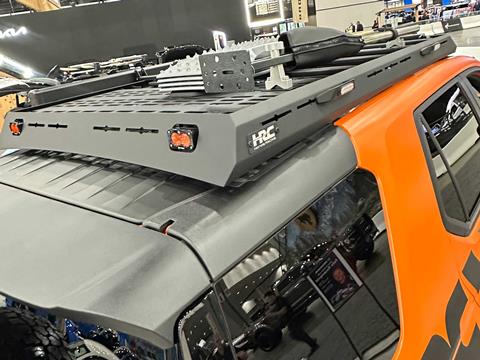
Highlights included a hidden WARN winch integrated cleanly into the front end and paired with a Factor 55 fairlead, along with Baja Designs ditch lights and roof rack lighting that blended seamlessly into the vehicle’s design.
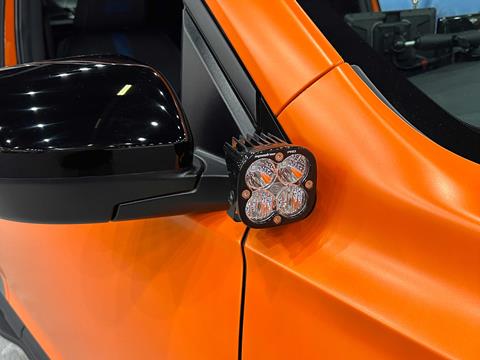
An HRC-developed roof rack, forged wheels, and an impressive modular rear bumper with a swing-out system rounded out a package that looked ready for serious trail use.
We had the opportunity to speak with Brent Nordmann, Head of Engineering at Honda Racing Corporation USA, who explained that many of the parts on display were one-off components developed to explore what the Passport platform could support.
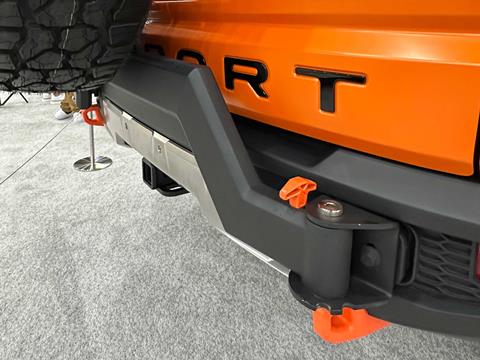
While this HRC build isn’t a production model, the concepts behind it may influence future trims or optional packages. Seeing these ideas applied to a Passport Trailsport points toward a compelling direction—one where Honda offers a more aggressive, factory-backed option for buyers who want increased capability without stepping outside the brand’s ecosystem.
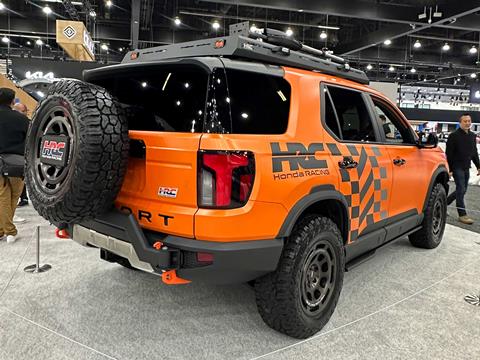
It’s a direction we’d welcome, and one that shows there may be more headroom in the Passport platform than many expect.
Access More Great Stories!
For more informative articles like this, consider subscribing to OVR Magazine in print or digital versions here. You can also find the print edition of OVR at your local newsstand by using our Magazine Finder.





No comments yet