





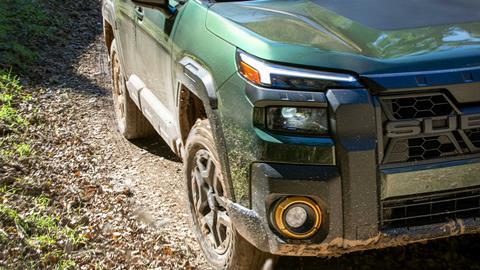
The seventh-generation Outback Wilderness abandons its wagon roots for a more aggressive SUV stance. With 9.5 inches of ground clearance, aluminum underbody protection, electronically controlled dampers, and a 360-degree camera system, Subaru’s adventure flagship delivers serious capability. But does the busier design resonate with enthusiasts? We drove it through California’s backcountry to find out.
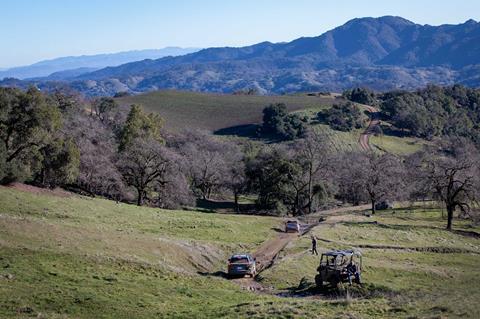
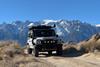
When the all-new Subaru Outback models debuted at the 2025 New York International Auto Show (NYIAS), people had strong opinions about them. They lost their wagon-like stature and have become more like SUVs. In November, 2025 we tested the standard Outback. And in January, we drove the 2026 Subaru Outback Wilderness (OBW) model in the hills near Healdsburg, California during their first-drive event.
At first glance The Outback and Outback Wilderness models seem very similar in design. But after spending time with the OBW, there are notable differences between the two. Will the company’s answer to what key customers want pay off? Time will tell.
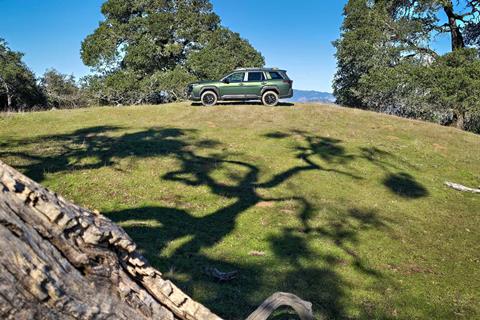
We tested other recently debuted Subaru vehicles like the 2026 Forester Wilderness and 2026 Crosstrek Hybrid. Extensive research and development let to many changes across Subaru’s line-up. The Outback and OBW models were no exception. They remain tight-lipped about any potential Outback Hybrid version, however.
2026 Subaru Outback Wilderness Stats for Off-Road Use
The Wilderness version of the Outback was initially developed off the existing Outback platform. When Subaru launched it in the Wilderness version in 2022, they said it was “self-compromising both in off-road capability and on-road manners.” However, with the new 7th generation Outback, they had the Wilderness version specifically in mind when developing the new platform.
According to Subaru, almost 50% of Wilderness buyers are under the age of 55—basically one in three compared to the standard Outback. According to their studies, buyers hike, camp, fish, paddle, and bike, among other adventurous activities.
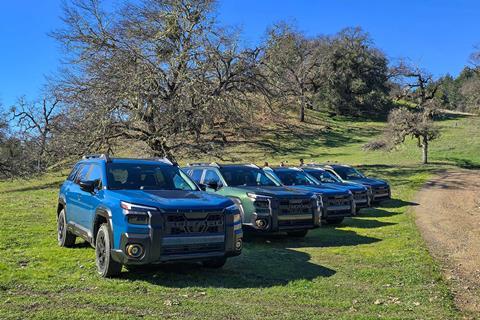
Subaru focused on upgrading the off-road capabilities and utility in the 2026 OBW design, but still kept in mind refining its on-road compliance, too.
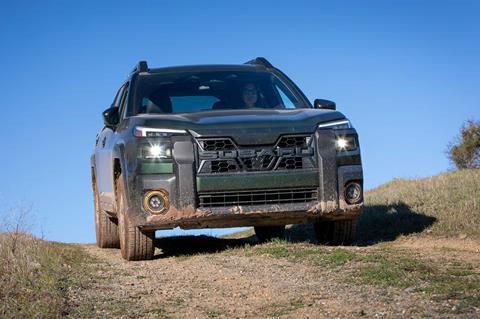
Subaru’s goal was to create a Wilderness that provides “proven capability, purposeful stance, and a stronger presence, but also a design philosophy that shifted with specific changes in mind.” For the automaker, there are “drastic changes to the front and rear fascias of the vehicle, and the size stance as well.”
True to capability, the new OBW has more ground clearance (9.5” versus 8.7”) and now has a 1.2-millimeter-thick aluminum underbody “cover” vs. the preceding plastic splash guard.
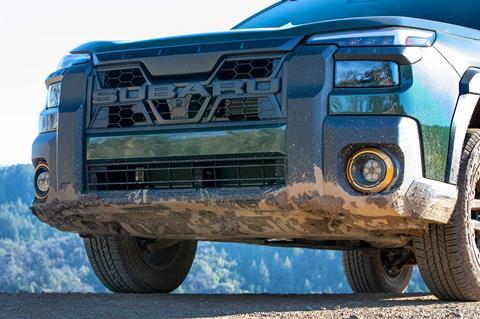
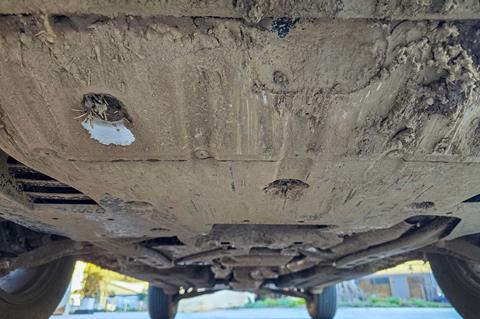
When we asked for details on this change, Subaru said, “The front under guard with added aluminum protection helps to protect the lower section and engine components from flying rocks while driving and debris off road. Plastic components risk falling off, damage, or perforation when contacting the road surface and adding aluminum plates reinforces these areas.”
The 2026 Outback Wilderness also showcases the following:
- Approach angle Wilderness: 20° (18.0° Outback)
- Departure angle Wilderness: 23.6° (21.4° Limited XT, Touring XT: 22.5°)
- Breakover angle Wilderness: 21.2° (19.4° Outback)
Tire Talk, Suspension, and Body Cladding
Subaru’s latest OBW still retains all-terrain tires on 17-inch matte black wheels. But they’re now 225/65R17 Bridgestone Duelers instead of Yokohama Geolandar A/T G015s.
Subaru said the reason behind the change was that “efficient and consistent sourcing is critical to maintaining production continuity and meeting customer demand.
This approach allows us to respond more effectively to market conditions while continuing to deliver products that meet our performance and quality standards.” Note: White letters are still facing out. A full-size, all-terrain spare tire comes standard.
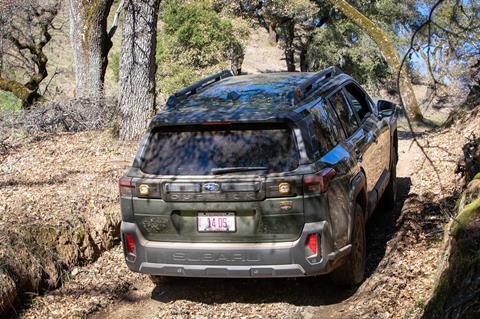
The 2026 OBW also has enhanced suspension, now equipped with electronically controlled dampers. This is so the vehicle can maintain a smoother, more stable posture and controlled ride when it crosses over uneven terrain.
Based on Subaru’s studies, the electronically controlled dampers have a 23% improvement over the previous-generation Outback Wilderness, as well as 50% improvement when X-Mode is engaged.
This AWD comes with a Wilderness-exclusive dual-function X-MODE feature. This includes Snow / Dirt mode and Deep Snow/ Mud mode (under 25 mph); Deep Snow / Mud mode (above 25 mph).
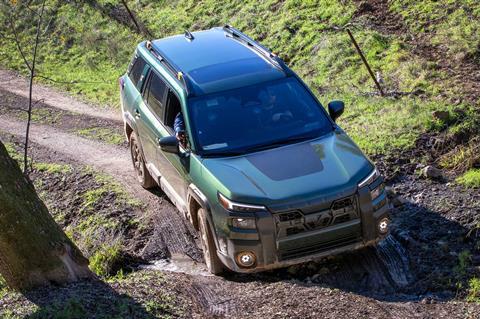
This model also features Low Speed / Low Ratio Gradient Control that can detect if the vehicle is on steep gradients. The CVT will create a low ratio–essentially a simulated low-range–to help compensate for it, if needed.
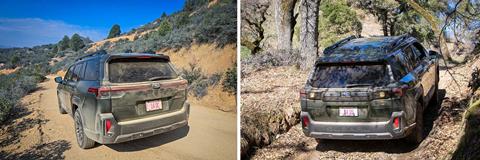
There is beefy plastic exterior cladding on all sides, which includes a variety of angular, sloping, and indented elements. New for the 2026 OBW is a plastic area on both sides of the rear Subaru emblem that stands proud of the lift gate.
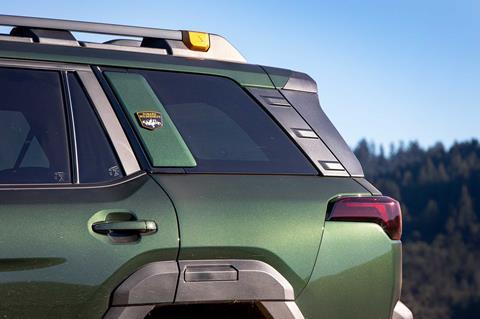
Upon first inspection, it was a curious detail. However, Subaru said it was an intentional place to lean skis, snowboards, fishing poles, or anything else against the vehicle without scratching the paint. Smart. The 2026 OBW also boasts signature gold anodized copper Wilderness accents, including framing the fog lights and rear reverse lights.
Other Bits
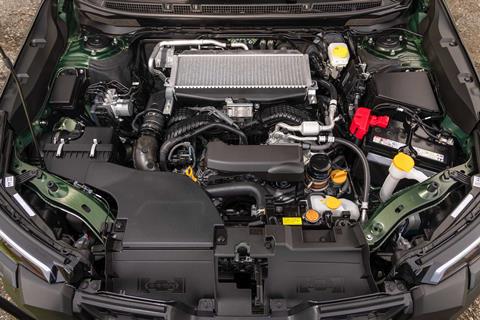
The 2026 Subaru Outback has a revised 2.4-liter four-cylinder turbocharged Boxer engine mated to a CVT. This powerplant generates 260 HP and 277 lb.-ft. of torque. Manual mode and paddle shifters are included, which we tested on- and off-road.
Standard high-strength raised ladder-type roof rails boast an 800-pound static load capacity when parked and 220 pounds dynamic (driving) load capacity. Great for hauling heavy gear or a rooftop tent.
The 2026 Subaru Outback Wilderness also offers a specific 220-pound lateral (side) load rating, so you can hang a hammock from it at camp, among other things. Subaru includes integrated roof-rail hooks to be used as dedicated tie-down points.
The company also designed a removable rear trailer hitch bumper cover. No more cutting bumpers to fit up a trailer hitch for towing. Note: The Wilderness can tow up to 3,500 pounds.
StarTex upholstery is once again featured on two trims for this year’s OBW. Additionally, black Nappa leather with copper stitching can be had as an option with the model’s top touring trim.
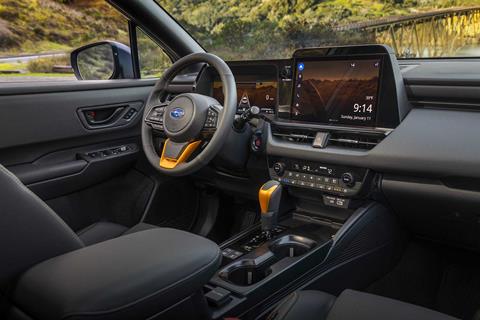
“Nappa leather was added this year to Wilderness for customers who’ve indicated they prefer those conveniences with added off-road capability,” said Aaron Cole, a Product Communications Manager for Subaru.
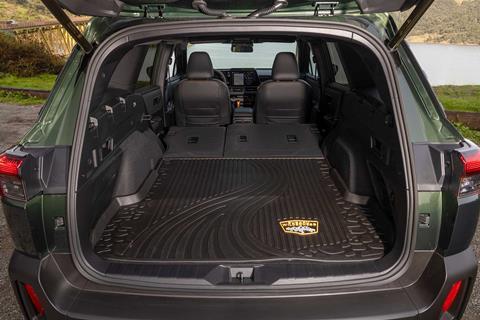
The overall cargo capacity has jumped up two cubic feet. The rear cargo opening has also increased by one inch in height compared to the previous OBW.
EPA ratings on fueleconomy.gov’s website says the 2026 Subaru Outback Wilderness gets 21 city, 27 highway, 23 combined, however, the literature Subaru gave us still says TBD.
Exterior Comparison

360-Degree Surround View Monitor
Along with Subaru’s vast safety systems, an all-new, exclusive 12.1-inch high-resolution multimedia system showcases quicker system response times up to 2.5 times faster regarding processing than the previous generation. It includes better brightness, improved anti-glare improvements, and a smoother overall experience.
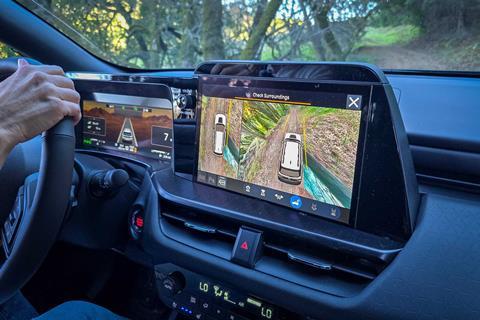
Top trims also get the new 360-degree Surround View Monitor camera system. No more guessing how close a trail hazard is to your vehicle or what’s over a steep crest.
Subaru’s system gives drivers different views of their vehicle on the trail (various bird’s eye views and fender angles) which work great. We’re glad to see this upgrade, however, we hope Subaru will roll it out on all Wilderness trims in the future.
This camera system uses Subaru’s advanced EyeSight technology. It can be turned on via the camera button located by the gear shifter, next to three other same-sized flush-mounted buttons. This physical button isn’t intuitive, however, like ones found on the steering wheel or stalk end, that are easy to depress while moving and looking forward.
Auto Mode On or Off
During off-road testing, the camera system shuts off at about 13 mph as we increased speed. However, once the system shut off, it didn’t come back on again once we slowed to below that mark.
We weren’t sure why. However, another journalist said their system turned off and on according to speed when on the dirt and mud-filled trail. We dug deeper as to why this happened.
We discovered there is an AUTO mode that turns the camera system back on at lower speeds (similar to how X-MODE works) if enabled. Ours wasn’t.
“Surround View Monitor shuts off at approximately 13 mph,” said Karley Dowdy, a Product Communications Specialist for Subaru. “When AUTO mode is enabled, the system will automatically turn back on once vehicle speed drops to 9 mph or less, displaying the previous camera view. If AUTO mode is not enabled, the system will not reactivate on its own and must be manually turned back on using the camera button, which explains why it may not have reactivated during testing.”
We also learned from the automaker that AUTO mode will stay on after the vehicle cycles on and off, when selected. Great for when you’re off-roading it a lot.
Other manufacturers’ 360-degree camera view systems, like the Trail Watch Camera System Honda uses on its TrailSport models, are turned on by depressing a button on the end of the windshield wiper stalk.
It’s easy to engage the camera system without taking your eyes off the trail. Subaru’s camera system worked well when engaged. However, we hope they’ll follow suit and add a physical camera button on the steering wheel or somewhere that’s easier to access.
Just like Subaru did with the physical X-MODE button they added on the steering wheel with this year’s model vs. on the infotainment screen like the previous iteration.
The 2026 OBW also has a 12.3-inch full-digital driver’s instrument cluster featuring Sedona Mountain graphics and all the info you’ll need to stay informed.
First Impressions
The 2026 Subaru Outback Wilderness is polarizing to many. We asked a few fellow Subaru enthusiasts for their thoughts.
Bob Holland, a moderator of Facebook’s Subaru Café group says, “[On] both models, but especially the Wilderness, the exterior styling is way too fussy and overdone, too many styling cliches. How these awkward looking Outbacks and the gorgeous Trailseeker EV emanate from the same automaker is beyond me.

The two vehicles have design languages that are polar opposites. The interior, specifically the dashboard and infotainment, is superb. HUGE improvement. Can’t wait for this new and vastly improved tech to make its way into the rest of the Subaru lineup. The new Outback is on my short list, as the interior is far more important than the exterior to me. I ‘live’ in the interior. I only have to deal with the exterior upon entering and exiting the vehicle.”
“I absolutely love the redesign on the Wilderness,” exclaims Aimee Moreau.
Aj Teixeira stated, “The plain one [non-Wilderness Outback] has a busy front end. There’s just a lot of surfaces and transitions. It’s just … busy. Having said that it doesn’t bother me enough that I wouldn’t get one. I like the boxiness and packaging. The Wilderness face is a little more streamlined and works better. I like the ‘SUBARU’ lettering on the grille. Ironically after writing all that if I bought one it would not be a Wilderness.”
The consensus seems that the new redesign of Outback Wilderness seems a bit overdone or busy. A few owners even said they’d hold onto their older Subaru for a while longer due to the redesign.
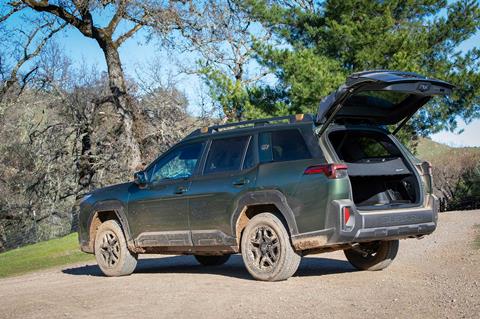
But others really like it. We wonder about the cleanability of its exterior, with its mix of crevices and angular insets on the plastic body cladding and front grille after a dirt- or mud-filled day of fun. However, no matter the opinion, Subaru continually improves its off-road capabilities and overall comfort, which hits home to many potential customers and current owners.
Drivability
The 2026 Subaru Outback Wilderness performed as expected off-road. We toured through dirt tracks and deep mud-caked stretches without issue. The ride was comfortable, compliant, and stable.
We didn’t experience any rocky terrain but did encounter a few steep inclines and declines in which X-MODE and its associated hill descent control worked well and as intended.
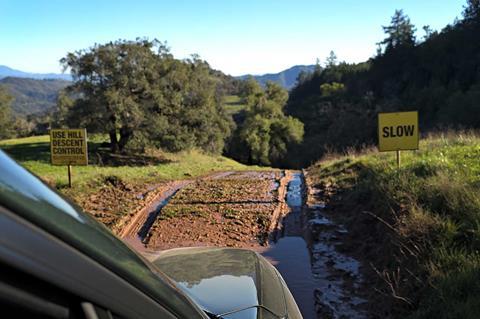
We didn’t get to push the 2026 OBW’s limits as much as we did while testing the 2024 Crosstrek Wilderness at the vehicle’s launch in Utah.
However, armed with the supplied spec and tech data, along with our first-hand experience driving it on- and off-road, we’re confident the new 2026 Outback Wilderness will continue to support Subaru’s quest for adventure. It had adequate power when needed and was very enjoyable to drive on California’s paved twisties when using paddle shifters.
Pricing
The standard 2026 Outback Wilderness model has a base price of $44,995 ($46,445 including $1,450 destination and delivery). Bump it up with the “22” option package and you’ll be set back $47,040 ($48,490 with D&D).
If you’re interested in the top touring trim “23” level, the cost is $49,085, which totals $50,535 for destination and delivery. Both 22 and 23 optional packages include all base-standard equipment.
When the average new price of an automobile is around $50,000, Subaru still offers a lot of adventuring bang for the buck with an extremely capable AWD rig. The new Outback Wilderness is offering a lot of features and solid upgrades for under that price point.
That leaves precious dollars left over for enthusiasts who want to travel and customize their vehicles, a very good thing–—even if some don’t necessarily care for its looks.
Access More Great Stories!
For more informative articles like this, consider subscribing to OVR Magazine in print or digital versions here. You can also find the print edition of OVR at your local newsstand by using our Magazine Finder.


No comments yet