






Honda’s surprise entry into the travel trailer space targets crossover and compact SUV owners with a lightweight, modular base-camp solution that emphasizes space efficiency, off-grid capability, and accessibility for a new generation of vehicle-based adventurers.
Honda is best known for its cars, light trucks, motorcycles, powersports vehicles, and small engines, so the reveal of the Base Station Prototype comes as a genuine surprise. Rather than another vehicle platform, Honda is stepping into the travel trailer space with a compact, lightweight, towable base-camp solution aimed at lowering the barrier to entry for camping and outdoor travel.
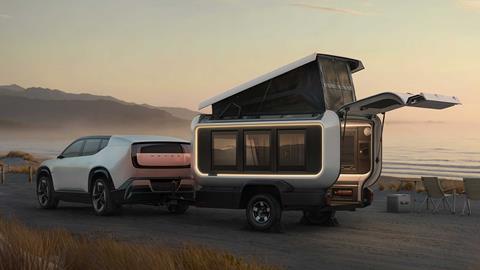
The Base Station is a towable travel trailer designed to be pulled by compact and midsize crossovers, including vehicles like the Honda Passport, Honda CR-V, Toyota RAV4, and even electric vehicles such as the Honda Prologue.
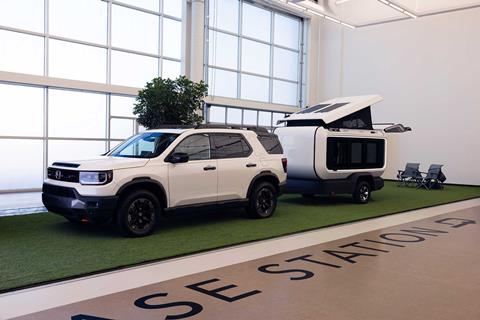
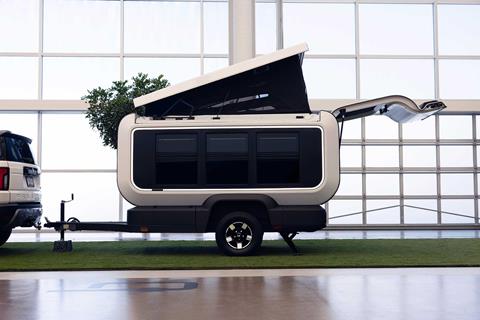
This immediately separates it from many traditional travel trailers that require full-size trucks or large SUVs. For many vehicle-based adventurers, especially those already driving CUVs, this opens up a category that previously felt out of reach.
From a packaging standpoint, the Base Station leans heavily into Honda’s long-standing approach to space efficiency. Despite its compact footprint, the trailer features an open interior that prioritizes usable space and natural light.
Five large side windows brighten the cabin and can be removed or swapped for accessories, while a pop-up roof creates approximately seven feet of standing room once deployed. At the rear, a top-hinged tailgate opens directly to camp, blurring the line between indoor and outdoor living.
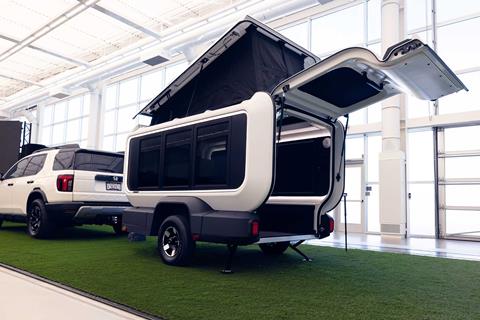
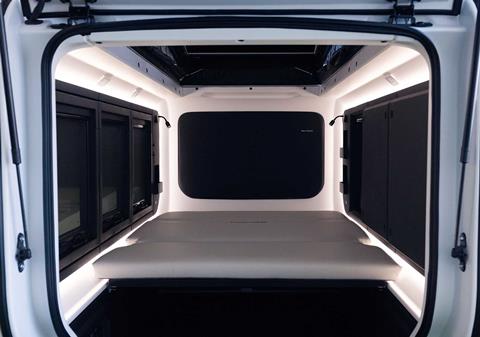
Sleeping accommodations are straightforward but thoughtful. A futon-style couch folds out into a queen-sized sleeping area, and an optional bunk setup allows the Base Station to sleep up to four people. The overall layout feels intentionally flexible rather than fixed, reinforcing its role as a base camp rather than a fully built-out RV.
The prototype also highlights Honda’s interest in modular systems and integrated technology. Ambient lighting rings around the windows serve both practical and aesthetic purposes, offering adjustable brightness and color while helping illuminate camp after dark.
Power comes from an onboard lithium battery system with an inverter and integrated solar panels, allowing for off-grid use. External hookups support campground power or portable generators for longer stays.
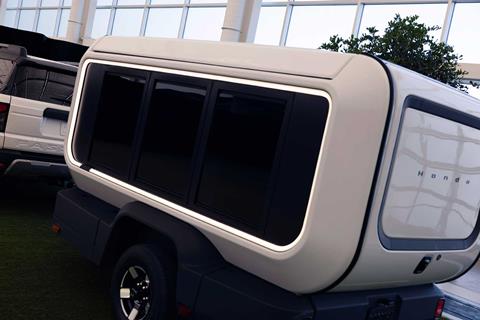
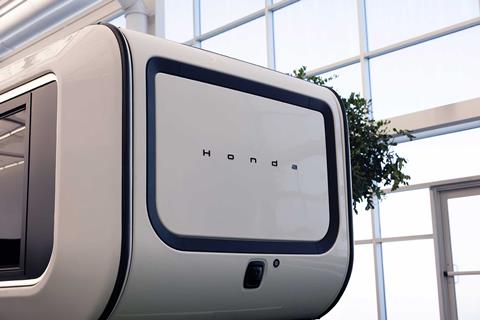
Externally mounted accessories shown on the prototype include an induction cooktop kitchen, running water, air conditioning, and an outdoor shower. These features emphasize the Base Station’s modular nature, suggesting a platform that can be adapted to different styles of camping rather than a one-size-fits-all solution.
Conceived by Honda’s U.S. research and development teams in California and Ohio, the Base Station Prototype feels like an experiment in expanding what “Honda adventure” can mean.
While still a prototype, it presents an interesting alternative for travelers looking for a lightweight, accessible base-camp trailer that aligns with the vehicles many already own.
Access More Great Stories!
For more informative articles like this, consider subscribing to OVR Magazine in print or digital versions here. You can also find the print edition of OVR at your local newsstand by using our Magazine Finder.





No comments yet