









Choosing tires based solely on size and tread pattern overlooks a critical factor: load rating. The right load capacity for your vehicle’s weight dramatically affects ride quality, fuel economy, and suspension performance. Here’s why matching tires to your rig matters—and how to get it right.
If you are like most overland vehicle owners, choosing tires comes down to determining what will fit your vehicle with your chosen suspension, and then picking the tread pattern you prefer within your given budget.
Typically, there is little, if any, thought given to the load carrying capacity of the tire or the weight of the vehicle. The load index is an important factor in traction, puncture resistance, and particularly ride compliance, so it’s wise to take it into consideration.
It is not uncommon to spend thousands of dollars on an aftermarket suspension, but if you hamper that suspension with the wrong tires, you do it a disservice.
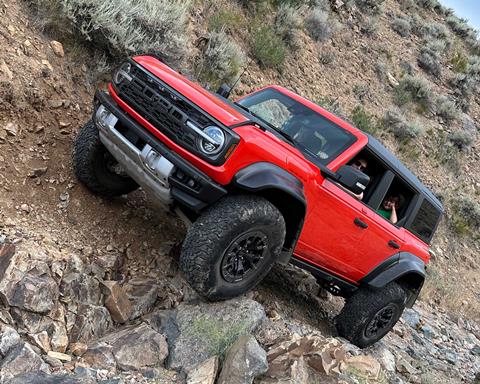
Take, for instance, the new Ford Bronco Raptor. This purpose-built off-road vehicle comes with a 37-inch BFGoodrich All-Terrain KO2 tire in a Load Range C.
This is a tire that Ford commissioned BFGoodrich to make specifically for the Bronco Raptor, as the typical 37-inch KO2 comes in a Load Range D.
The Load Range D tire is rated to carry 3,525 pounds at 50 psi, while the Load Range C tire specs out at 2,755 pounds at 45 psi. The Load Range C tire also weighs 10% less (63 pounds versus 69 pounds).
What Are Load Ratings?
Before we get ahead of ourselves, we should take a step back and talk about some terms as they relate to load ratings.
Tires come in P-Metric, Standard Load (SL), Extra Load (XL), and Light Truck (LT) designations. P-Metric, SL, and XL tires have a load index indicated by a numerical code (e.g., 95) associated with the maximum load the tire can carry at the speed indicated by the tire’s speed symbol (e.g., “T”).
Tires with the same load index, regardless of tire size, may carry the same load (but not always), and they may require substantially different inflation pressures.
And an equal or greater load index does not always correspond to equal or greater load capacity at all inflation pressure settings, particularly when comparing P-Metric and LT tires.
LT tires have an associated load range such as C, D, or E. This has a ply “equivalency” that does not indicate the actual number of plies, but dates back decades to when bias-ply tires added more plies to carry more weight.
Load ranges indicate a maximum inflation pressure, and in general a higher load range can carry more weight, but it is not unheard of for a Load Range D tire from one brand to be rated to carry more weight than a Load Range E tire from another brand in the same size.
What Tires Does My Vehicle Need?
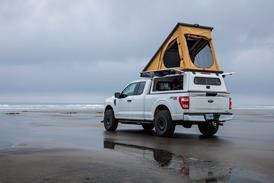
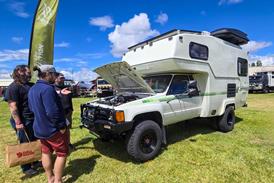
Knowing how much your vehicle weighs is important when choosing tires. If you drive an Earthroamer or a one-ton truck with a slide-in camper, LT tires in Load Range E are the appropriate choice.
If you are driving a popular Tacoma or Wrangler though, Load Range E might not be the best option. These vehicles often weigh about 6,000 pounds when loaded, so even a Standard Load tire rated to carry 2,000 pounds each would be adequate for these vehicles.
Standard Load tires tend to be lighter than LT tires, providing increased fuel mileage, acceleration, and braking.
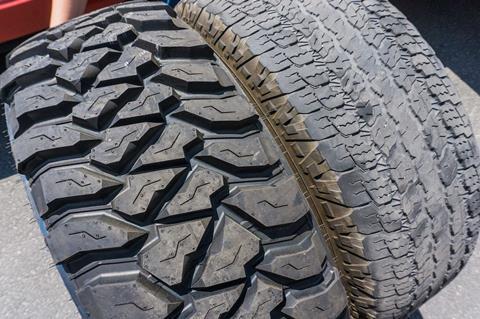
This is the reason you see OEMs such as Toyota outfitting their trucks with P-Metric tires, even in off-road-specific trims. These tires cost less, provide better ride quality, and increase fuel mileage.
In our experience, when swapping to factory-sized LT tires on a 2016 Tacoma TRD Off-Road, we saw a decrease in fuel mileage of 3 miles per gallon because of increased weight and rolling resistance. Ride quality suffered as well.
Under- & Overinflated Tires
Sometimes we will encounter people who say, “My tires say that they can carry 3,700 pounds at 65 psi, so I inflated them to 65 psi.” This is typically followed by complaints about poor ride quality.
The tires only need to be inflated to the maximum pressure if you are carrying the maximum load that they are specified for.
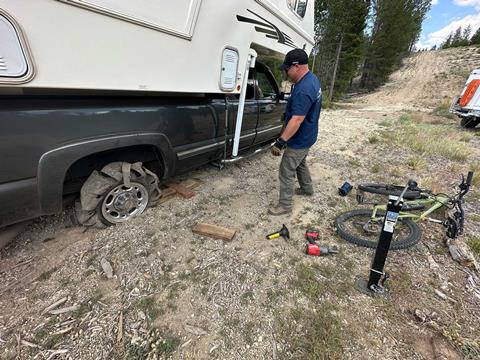
Overinflated tires not only wear prematurely; they also ride terribly since the tire carcass cannot flex as it encounters obstacles.
On the flip side, we often air our tires down to improve ride when we leave the pavement. This allows the tire to flex on the trail, but if you run underinflated tires at freeway speeds, the rolling resistance can generate so much heat that it causes the tire to delaminate and fail. When in doubt, “err” on the side of too much “air.”
Correct Tire Pressure
All this information might lead you to wonder what the correct tire inflation is for your vehicle. The pressure listed on the door placard is only applicable to your vehicle when it is the stock weight, and when it has not only stock-sized tires but the original load rating as well.
One popular practice to ensure even tread wear is to do a chalk test, where you put chalk across the face of the tire and then roll it down an even surface, such as a driveway.
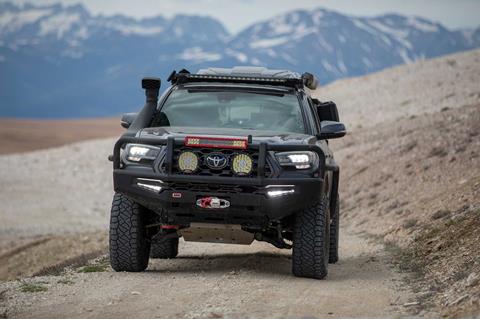
If the chalk wears away in the middle, the tire is overinflated. If the chalk wears away at the edges, it is underinflated. To maximize tread wear, you want the chalk to rub away evenly across the tire.
If you know what your vehicle weighs, most tire manufacturers have inflation tables that list how much weight different-sized tires are rated to carry at various inflation pressures.
The tables are not exactly linear, but they are relatively close. In other words, a tire rated to carry 4,000 pounds at 60 psi will generally carry close to 2,000 pounds safely at 30 psi.
Are There Advantages to SL Tires?
Tire manufacturers are starting to offer more than one load range in popular sizes, such as 285/70R17. For instance, Nitto offers its Recon Grappler in this size in both a Standard Load and a Light Truck tire in a Load Range E.
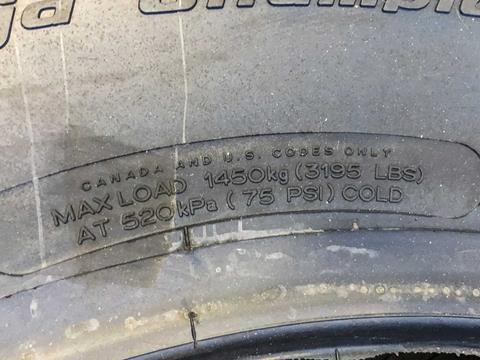
The SL tires are rated to carry 2,756 pounds at 44 psi and weigh 49 pounds, while the Load Range E LT tires are rated to carry 3,750 pounds at 80 psi and weigh 55 pounds each.
We tested both Recon Grapplers on a 2018 Toyota Tacoma TRD Off-Road and found that not only did the SL tires weigh less, they also had softer durometer rubber and increased siping, both of which aid in traction on the pavement and on the trail.
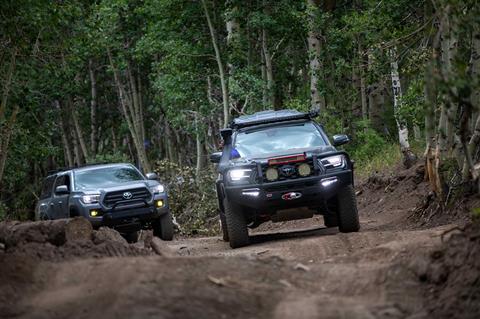
While we do not know Nitto’s exact rationale for this, we can theorize that a tire designed for a lighter, lower-horsepower vehicle can have more siping without concern of tearing off lugs, and can be softer while still offering decent treadwear.
The biggest difference we noted on the Tacoma was how much better the ride was with the SL tires when traveling over washboard and embedded rocks without airing down the tires.
What About Puncture Resistance?
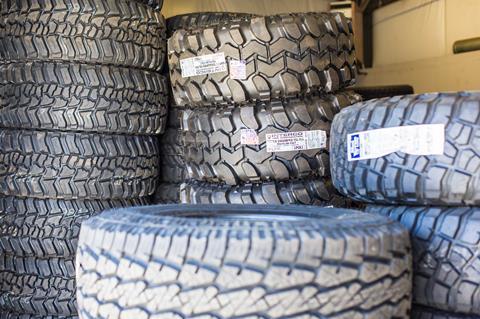
One of the most challenging things to quantify is puncture resistance. A tire that has stronger construction will be less likely to suffer a pinch flat, where the object contacts the rim and cuts the tire. Similarly, a stronger, thicker sidewall will likely resist being cut on the trail. Or will it?

We can envision situations where a more pliable carcass will conform to terrain and envelope an obstacle rather than being punctured by it. In our experience, SL tires are necessarily more likely to suffer punctures than LT tires.
Conclusions
The next time you are shopping for tires, take into consideration more than just the size and the tread pattern of the tire. Whenever possible, match the load rating of your tires to the weight of your vehicle.
Doing so can provide improved fuel economy, better acceleration, and greatly improved ride quality. And those are important factors whether you are going across town or across the continent.
Access More Great Stories!
This article originally appeared in OVR Issue 11. For more informative articles like this, consider subscribing to OVR Magazine in print or digital versions here. You can also find the print edition of OVR at your local newsstand by using our Magazine Finder.


No comments yet