








The BFGoodrich All-Terrain KO3, successor to the wildly popular KO2, promises better wear, improved gravel durability, and enhanced snow traction. After 3,000 miles of testing through mud, snow, and rough terrain, we evaluate whether BFGoodrich’s latest all-terrain lives up to its legendary predecessor.
BFGoodrich invented all-terrain tires back in 1976. The company (named for company founder, Benjamin Franklin Goodrich) introduced the Radial All-Terrain T/A for blasting around the desert. Since then, it’s had three more iterations, including the wildly popular KO2, which debuted in 2014.
In fact, I’ve had KO2s on three different vehicles. When the LT215/75R15 KO2s were ready to be replaced on our 2022 Subaru Crosstrek, I reached out to BFG about the KO3s, and they sent a set for review and testing.
What Makes the BFGoodrich KO3 Different: Design and Technology
BFGoodrich KO3 vs KO2: Key Differences and Improvements
With each KO (“key off-road”) all-terrain iteration, there were improvements, and that’s the case with the latest KO3s. According to the company, the KO3s improved off-road performance by providing better wear longevity, higher durability on gravel, and increased snow traction versus the outgoing tire.
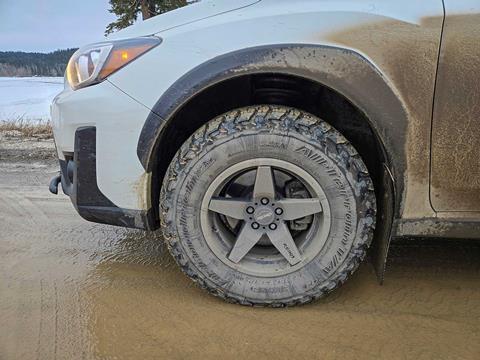
This is while maintaining the things buyers liked about the KO2, such as tough sidewalls and a rugged look.
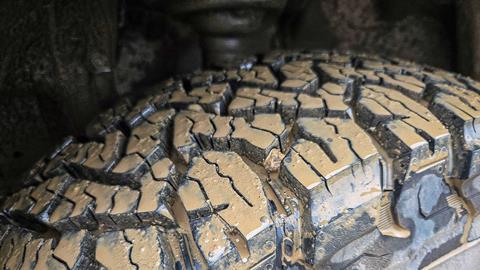
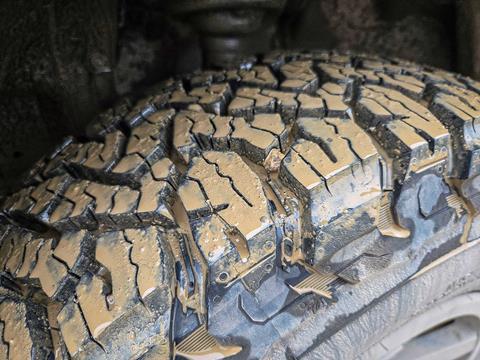
The KO3s have a redesigned tread pattern helping to achieve some of the aforementioned traits. While the lugs look similar, they are different. You can see the shapes are not the same, and there are more sipes.
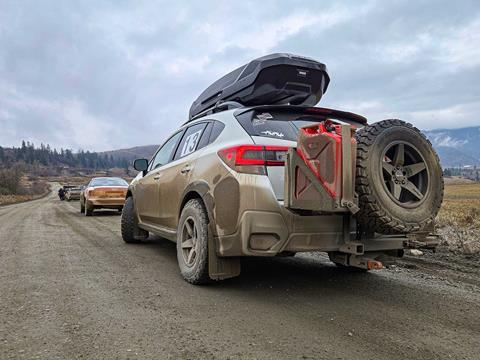
The KO3 has a different rubber compound than the KO2s as well. This is designed to help increase the gravel road durability and snow traction. In fact, after doing the 7,100+ mile TransAmerica Trail on KO2s in a 2025 Subaru Crosstrek Wilderness, we noticed they were pretty chewed up.
BFG says the KO3s will fare better on gravel. Like the KO2s, the KO3s have serrated shoulders and mud-phobic bars helping this all-terrain do as well as possible in stickier mud.
I can tell you that, as my KO2s wear, they got louder, and that was the case with the tires on our Subaru. While we have KO2s on two other 4x4s, those vehicles are loud to begin with. The Subie is quieter and you could hear the road noise more.
BFGoodrich KO3 On-Road Performance: Noise and Wet Traction
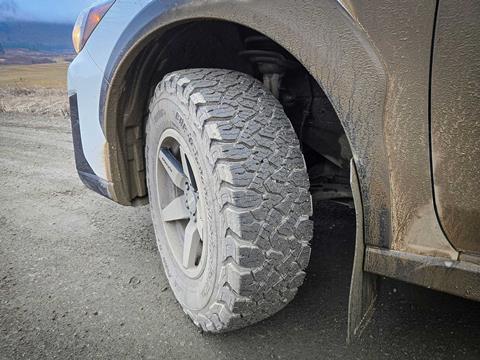
First off, the KO3s look great. They continue BFGoodrich’s tradition of making aggressive-looking all-terrain tires. They are not lightweight, but they’ve always been exceptionally durable.
As mentioned, I could tell from leaving the tire shop on the KO3s that they were quieter than the KO2s. We had racked up 30,000 miles on the KO2s on our Subie, and still had plenty of tread, by the way.
The first part of our testing was on pavement. We logged 1,000+ miles on the tires, and my reality was validated: they’re quieter than the KO2s.
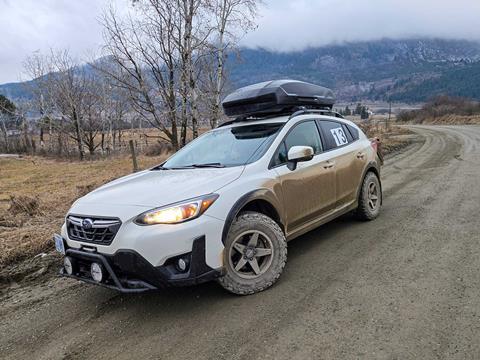
The other thing I noticed? Better wet traction. I was able to fairly easily induce understeer with the 215mm-wide KO2 on the Crosstrek, but the KO3s tended to grip better in the wet.
BFGoodrich KO3 Snow and Ice Performance Testing
We took our ’22 Crosstrek up to British Columbia for the 2026 Thunderbird Rally, a multi-day time-speed-distance event. Usually, this event features hundreds of miles of snow-covered backroads.
This year? Only a few; the rest was dirt, gravel, and mud. However, the KO3s did a good job in what snow there was.
They’re 3PMS (3 Peak Mountain Snowflake rated), so they’re going to provide improved traction vs. a M+S (Mud and Snow) tire, but not as good as a dedicated winter tire. We had an icy stage as well, and we were able to successfully keep the car out of the ditch.
However, studded winter tires would’ve been the right tools for that job. Overall, I’d say the KO3s are as good as the KO2s in the snow, but we didn’t get tons of snow testing.
BFGoodrich KO3 in the Slop: Real-World Mud and Dirt Performance
While the snow was lacking, the dirt and mud wasn’t. This is where the KO3s really shined. We did countless miles of rough, pothole-strewn dirt tracks with puddles and muddy conditions. The KO3s ate it up. The improved all-terrains offered scads of grip and chewed through the muck.
Handling on the dirt, gravel, mud, and slop was predictable and confidence inspiring. Our performance on the ice wasn’t great, but we slayed it in the slop. The tires were very impressive here.
BFGoodrich KO3 Weight Comparison: How It Stacks Up Against Competitors
The KO3s aren’t lightweight, but they’re not the heaviest option either. The LT215/75R15 KO3 we tested weighs 34 lbs. per tire, up from 32 lbs. on the KO2 in the same size.
By comparison, the same size Yokohama Geolandar A/T4 are just 30.9 lbs., the Hankook Dynapro AT2 Xtreme and Kumho Road Venture A/T 52 are also 34 lbs., although the Falken Wildpeak A/T4W in LT is a hefty 37.5 lbs.
Weight might not be a concern on bigger, more powerful rigs, but smaller vehicles, such as our Subaru, can have their performance affected by heavy tires.
To combat this, we utilize lighter-weight wheels by Reika to help keep rotating mass in check.
BFGoodrich KO3 Review Verdict: Is It Worth the Upgrade from KO2
Based on our extensive real-world testing across 3,000 miles of varied terrain, we found that BFGoodrich has done a solid job with the KO3. The new compound and revised tread blocks have proved their worth over the first 3,000 miles we’ve put on them.
We’ll be interested to see how the gravel road durability stacks up over time. But if you liked the KO2s, you’ll like the KO3s.
The BFGoodrich KO3 is competitively priced within the premium all-terrain tire segment, which also makes it an attractive choice for overlanders, off-road enthusiasts, and daily drivers who occasionally venture onto unpaved roads.
Tires aren’t something to skimp on, and BFGoodrich continues to be at the forefront of the all-terrain-class, even 50 years later.
❓ BFGoodrich KO3 FAQ: Real-World Testing Insights
Is the BFGoodrich KO3 better than the KO2?
Based on our testing, the BFGoodrich All-Terrain T/A KO3 shows clear improvements over the KO2 in several key areas. We noticed better on-road manners, including reduced road noise and improved wet-weather confidence. The KO3 feels like a refined evolution of the KO2, especially for drivers who split time between pavement and dirt.
Are KO3 tires good in snow?
While our testing did not specifically take place in snow, the KO3 carries the Three Peak Mountain Snowflake (3PMS) rating. This indicates the tire is designed to perform in severe snow conditions. Combined with the updated tread pattern and siping we observed, the KO3 is built with winter capability in mind.
How long do KO3 tires last?
We did not conduct a long-term mileage test, so we can’t speak to exact lifespan. However, BFGoodrich designed the KO3 with a new rubber compound aimed at improving durability, particularly on gravel and rough terrain. Based on our use, the tire appears built for long-term wear, but real-world longevity will depend on driving conditions and maintenance.
Are KO3 tires noisy on the highway?
One of the most noticeable improvements during our testing was reduced road noise. Compared to previous generations, the KO3 delivers a quieter and more composed ride on pavement, making it a strong option for daily-driven vehicles that still see off-road use.
What vehicles are KO3 tires best for?
Based on our experience, the KO3 is well-suited for vehicles that balance daily driving with off-road or overland use. In our test application, the tire performed well across pavement, gravel, and dirt, making it a good fit for SUVs, trucks, and crossovers used in mixed terrain environments.
Access More Great Stories!
For more informative articles like this, consider subscribing to OVR Magazine in print or digital versions here. You can also find the print edition of OVR at your local newsstand by using our Magazine Finder.


No comments yet