










Lithium batteries have transformed auxiliary power systems, but heat and vibration kept them out of engine bays—until now. Optima’s OrangeTop QH6 is purpose-built for under-hood use, featuring a self-jump function, Bluetooth monitoring, and rugged construction that could redefine how we power modern overland vehicles.
The Future of Under-Hood Lithium Power
The advent of lithium starting batteries in the automotive space has been a major step forward for vehicle-based adventurers, particularly those building overland rigs and expedition vehicles.
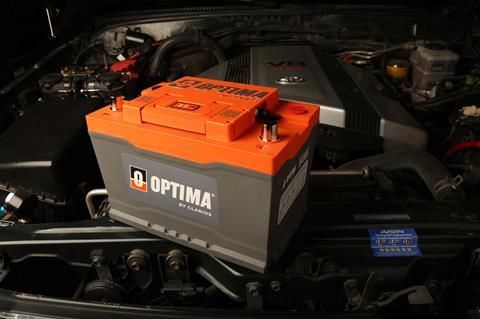
Compared to traditional lead-acid or AGM options, lithium car batteries offer higher usable capacity, faster charging, and significantly lower weight.
They can be discharged far deeper without sustaining damage, making them ideal for overland rigs, camper builds, and auxiliary power systems where every amp-hour counts.
Why Lithium Batteries Couldn’t Go Under the Hood—Until Now
For all their advantages, though, lithium batteries came with a significant limitation: they couldn’t traditionally be mounted under the hood.
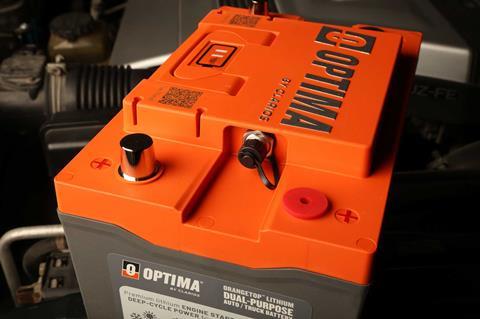
Sensitive to high heat, vibration, and exposure to dust or water, most lithium battery installations had to be located inside the vehicle cabin or in protected cargo areas, adding complexity and reducing available space in an overland vehicle battery system.
Optima OrangeTop QH6: Built for Engine Bay Installation
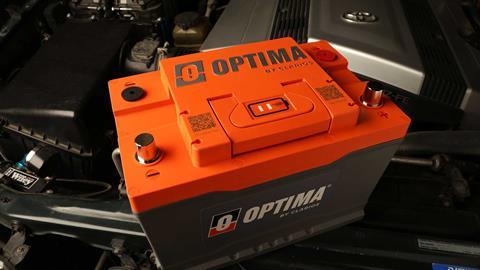
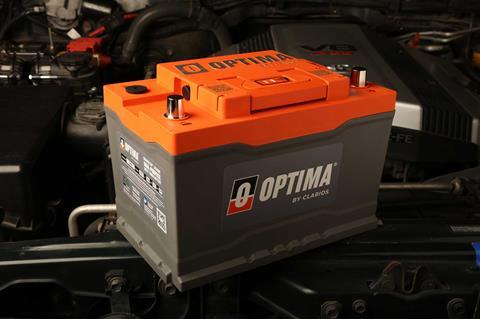
That’s now changed, with Optima introducing a lithium solution specifically designed for engine compartments. The new Optima OrangeTop QH6 is the company’s first lithium-ion battery approved for under-hood use.
It’s built to withstand the thermal, vibrational, and environmental stresses that come with being mounted in a vehicle’s engine bay.
Designed as a direct-fit Group 94R battery replacement for the common H6 form factor, the OrangeTop QH6 lithium battery fits a wide range of late-model trucks, SUVs, and off-road platforms that use 94R/H6-style batteries.
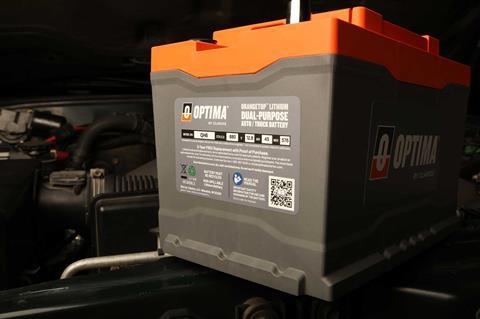
That broad compatibility makes the QH6 particularly appealing for modern overland builds and expedition-style vehicles that rely heavily on onboard electronics, refrigeration, lighting, or auxiliary charging systems.
In our testing, the swap was straightforward, requiring no changes to factory hold-downs or terminal connections.
But drop-in compatibility is just the start. The QH6 is packed with features that suggest a shift in how dual battery systems and standalone power solutions might be implemented going forward.
Optima CPR: Self-Jump Battery Technology
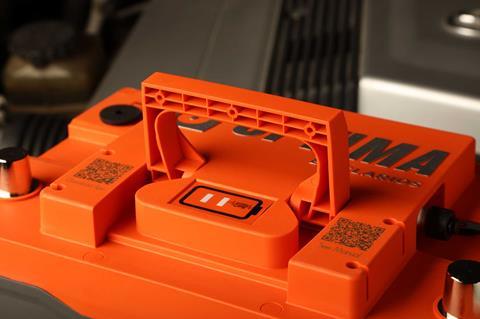
One of the most notable innovations is Optima CPR (Critical Power Reserve)—a built-in self-jump function that sets the QH6 apart from traditional lithium batteries.
This self-jump battery technology holds back enough internal reserve power to allow the battery to restart the vehicle if it has been drained by accessories, lights, or parasitic draw.
This function could dramatically simplify dual-battery installations. Instead of requiring a second battery, an isolator, and a tangle of wiring to safeguard against deep discharges, users can rely on CPR as a built-in safety net.
In the field, this means no more carrying a separate jump starter, no flagging down help, and no complex rerouting of power to get back on the trail.
During testing, we simulated a full accessory drawdown while parked and successfully restarted the vehicle using the CPR function with no external aid. That’s a powerful level of built-in redundancy, especially for solo travelers or those operating in remote areas.
Bluetooth Monitoring and the Optima Digital Battery App
The QH6 also includes Bluetooth battery monitoring via the free Optima Digital Battery App, available for iOS and Android. Once paired, the app displays real-time battery stats including voltage, current, internal temperature, and overall state of charge.

Historical data, low-voltage alerts, and temperature warnings can also be viewed, giving users a deeper look at how their battery is performing over time.
We found the app responsive and easy to use. Unlike a basic voltmeter or simple state-of-charge display, Optima’s system provides a more complete picture of battery health and charging performance.
This can be especially helpful when troubleshooting power draw or monitoring charging inputs from solar panels or alternators.
Additionally, the app offers CPR readiness status, so users always know whether the self-jump feature is armed and how much reserve capacity is being held.
Durability Features: Vibration, Heat, and Water Resistance
Beyond the digital features, the QH6 is built to take abuse. Its rugged case is both vibration- and water-resistant, and it includes quad terminals to support both OEM and auxiliary accessory wiring.
An integrated Battery Management System (BMS) balances charge between cells, prevents overcharging or overdischarging, and monitors internal temperature and voltage. There’s also short-circuit and overcurrent protection built in.
For overland travelers relying on off-grid vehicle power, those protections add another layer of confidence when operating in remote environments.
For those who want even more control, Optima’s optional Powerlink system offers options for remote mounting, fast charging, or high-amp accessory integration. That makes the QH6 even more versatile for complex overland or expedition-style setups.
Who Should Consider the OrangeTop QH6?
Compared to traditional AGM batteries, the OrangeTop QH6 offers distinct advantages for overland applications: deeper discharge capability, faster recharge times, and significantly reduced weight.
The CPR function also eliminates the need for a dedicated auxiliary battery in many use cases, simplifying electrical system design and reducing overall system cost.
While the Optima OrangeTop QH6 lithium battery is still new to the market, our early impressions are favorable. It combines the proven advantages of lithium chemistry with automotive-grade construction and a forward-thinking feature set.
Its ability to replace a standard AGM battery without modification makes it an especially attractive under-hood lithium battery solution for modern trucks, SUVs, and overland vehicles.
More importantly, its CPR self-jump capability, Bluetooth battery monitoring, and robust internal safety systems point toward a future where smarter, more self-aware automotive batteries become standard equipment rather than niche upgrades.
Is this the future of automotive lithium batteries? We think it might be. For those looking to modernize their vehicle’s 12-volt system or simplify an overland battery setup, the OrangeTop QH6 is worth a close look.
Access More Great Stories!
This article originally appeared in OVR Issue 18. For more informative articles like this, consider subscribing to OVR Magazine in print or digital versions here. You can also find the print edition of OVR at your local newsstand by using our Magazine Finder.





No comments yet