






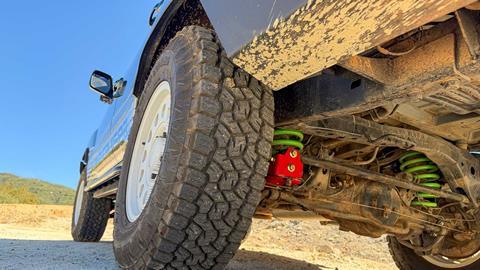
A lifted Land Cruiser 100 Series requires more than springs and shocks to handle properly. After resolving rear-end sway with a panhard bar correction kit, our OVR LC100 project revealed two additional concerns: bracket clearance under hard compression and abrupt bump stop engagement. The DR.KDSS B.O.T.C.K Shorty and a set of DuroBumps extended rear bump stops addressed both — here’s what we found after months of real-world testing.
Fine-Tuning the OVR LC100’s Rear Suspension With DR.KDSS and DuroBumps
Getting a lifted Land Cruiser to handle properly takes more than installing new springs and shocks. Suspension geometry, available travel, and how the vehicle responds to hard impacts all play a role in keeping things under control.
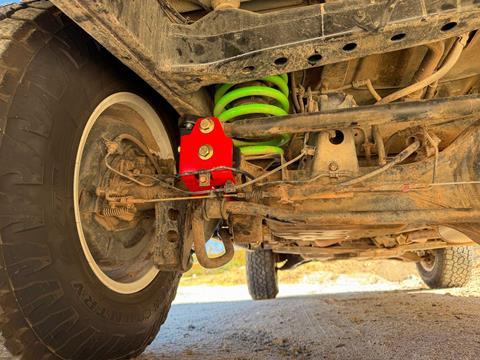
Our OVR LC100 has already benefited from a panhard bar correction kit that eliminated the rear-end sway we experienced at highway speeds. However, after putting more miles on the truck, we discovered there was still room for improvement.
In our original DR.KDSS B.O.T.C.K installation, we documented how correcting the panhard bar angle substantially improved the handling of our 2-inch-lifted Toyota Land Cruiser 100 Series. The truck tracked straighter, felt more stable, and no longer exhibited the unsettling rear-end movement we had experienced on highways and corrugated trails.
There was just one issue. Under extreme suspension compression, the standard-height correction bracket could occasionally contact the frame. It wasn’t a problem during normal driving, but particularly hard bumps could produce an unmistakable reminder that clearance was limited.
To address that issue, we returned to RPM Off-Road Garage for two additional upgrades: DR.KDSS’s newer B.O.T.C.K Shorty correction kit and a set of DuroBumps extended rear bump stops. Together, they offered a way to address bracket clearance while making hard suspension impacts less punishing.
Going Shorter With DR.KDSS
The original DR.KDSS B.O.T.C.K made a substantial difference in how our LC100 drove. Its bolt-on design corrected the rear panhard bar angle without requiring cutting, drilling, or welding.
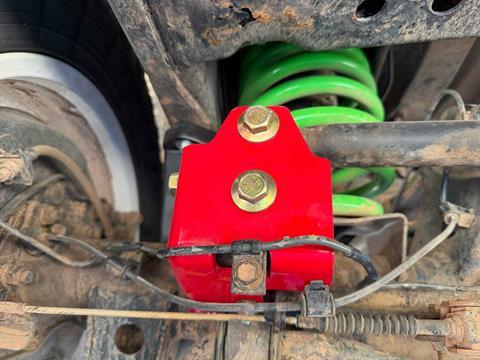
Unlike many competing solutions, the DR.KDSS bracket attaches to the left side of the axle and raises the panhard bar mounting point rather than lowering the opposite end.
The result was a much flatter panhard bar angle and noticeably improved rear-end stability. For a truck carrying the additional weight of overlanding equipment, that was an important improvement.
Unfortunately, the standard-height bracket’s proximity to the frame presented a clearance issue when the rear suspension compressed deeply. With our LC100 sitting approximately 2 inches above factory ride height, we occasionally experienced contact during harder off-road impacts.
DR.KDSS’s newer B.O.T.C.K Shorty provided a solution. The shorter bracket retains the bolt-on approach of the original design while reducing its height to provide additional clearance between the bracket and frame.
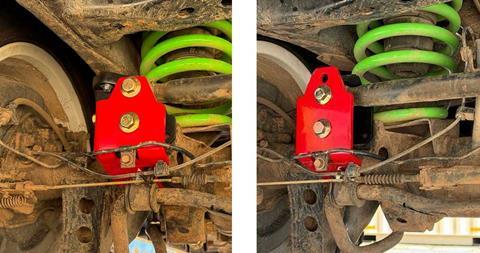
The Shorty eliminates the unused upper mounting position found on the standard-height bracket, reducing its overall height without changing the panhard bar’s mounting position on our LC100. This maintains the same corrected suspension geometry while providing additional clearance between the bracket and frame. For our 2-inch lift, it’s a better fit without compromising the handling improvements we experienced with the original kit.
DR.KDSS recommends selecting the appropriate bracket based on the height difference between the frame-side and axle-side panhard bar mounting bolts, rather than relying on advertised lift height alone.
According to the manufacturer, a difference of 1.5 to 2.99 inches calls for the Shorty version, while a difference of 3 inches or greater calls for the standard version. It’s a useful distinction, especially for vehicles carrying additional weight that can affect actual ride height.
We’ve now driven with the revised bracket for several months, including highway travel and off-road driving. The LC100 continues to track straight, the rear end feels stable, and, most importantly, we haven’t experienced any additional bracket-to-frame contact, even over substantial bumps. The Shorty has delivered the same handling benefits as the original bracket while resolving the clearance issue we previously experienced.
Taking the Hard Hits With DuroBumps
With the track bar clearance addressed, we turned our attention to another important part of the rear suspension: the bump stops.
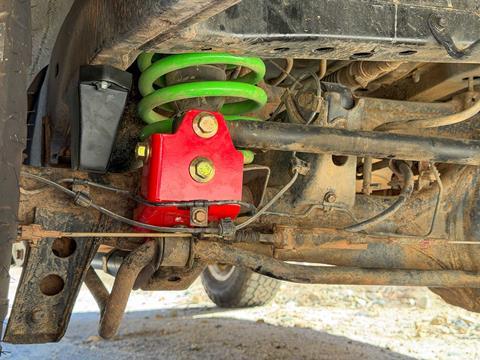
Bump stops are easy to overlook, but they perform an essential function. When the suspension approaches the end of its compression travel, bump stops help prevent components from making damaging contact. They also influence how harshly that final portion of suspension travel is felt inside the vehicle.
Conventional rubber bump stops can deliver a relatively abrupt impact when the suspension bottoms out. That sudden jolt is especially noticeable when a loaded vehicle encounters deep whoops, unexpected dips, or larger obstacles at speed.
RPM Off-Road Garage recommended upgrading to DuroBumps, which use a dual-durometer rubber construction designed to provide progressive resistance during compression.
Rather than delivering a sharp impact at the end of suspension travel, the material compresses progressively, helping absorb energy as the axle approaches its travel limit.
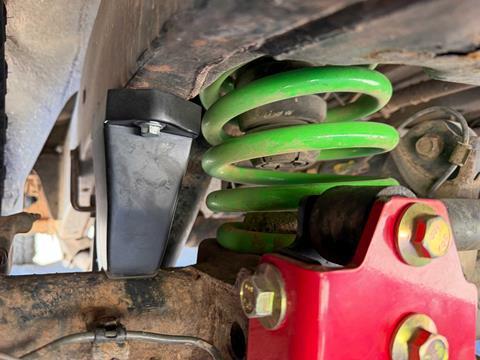
The goal is to soften those hard bottom-outs while maintaining the bump stop’s primary job of protecting the suspension and chassis.
For an overland vehicle like our LC100, this makes plenty of sense. With additional weight from our storage system, auxiliary batteries, recovery equipment, and camping gear, the rear suspension has more mass to manage when encountering large bumps.
Having a more progressive bump stop provides an additional measure of protection while helping reduce the jarring impacts transmitted through the truck.
A Small Fitment Compromise
There was one complication during installation. At the time our LC100 was at RPM Off-Road Garage, the available DuroBumps were the DBRLC525, an extended rear bump stop listed for applications with approximately 3 inches of lift.
Our LC100 has a 2-inch lift, making this particular bump stop approximately an inch taller than the alternative we’re considering.
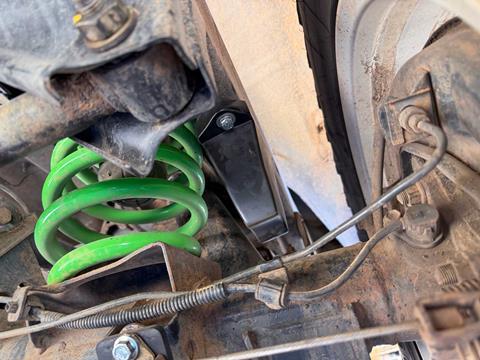
That difference is worth noting because bump stop height influences when the suspension begins to encounter resistance near the end of its compression travel. A taller bump stop generally engages sooner, which can help cushion hard impacts but may also reduce available suspension up-travel. How much travel is affected depends on the bump stop’s compression characteristics and the vehicle’s suspension setup.
In our case, the additional height may be limiting some of the LC100’s available compression travel. We haven’t measured the difference, but we’d prefer a bump stop better matched to our 2-inch lift.
Our plan is to replace the current 5.25-inch-tall DBRLC525 bump stops with the DuroBumps DBRLC425, which measures 4.25 inches tall and is recommended by the manufacturer for vehicles with at least 2 inches of lift. We expect the shorter version to provide a better balance between impact protection and available suspension travel, although the actual difference will depend on how the components work together.
For now, we’re continuing to run the taller bump stops. They’ve performed well during our testing, and we haven’t experienced any obvious handling issues associated with their additional height. We’re treating the planned change as another opportunity to fine-tune the suspension rather than a correction to a problem we’ve encountered.
Putting Them to Work
Over the past several months, we’ve had plenty of opportunities to put both upgrades to the test. Our LC100 regularly travels loaded with overlanding equipment, and the combination of rough trails, corrugated surfaces, and occasional larger impacts gives the rear suspension a workout.
The DuroBumps have been put to good use during several memorable off-road impacts. Their progressive compression has helped take the edge off those harder hits, making the rear suspension feel less abrupt when encountering larger bumps and dips.
The improvement is especially welcome when encountering unexpected dips or larger bumps that compress the suspension quickly. There’s still a noticeable impact, as there should be, but the end of suspension travel feels better controlled and much less punishing than before.
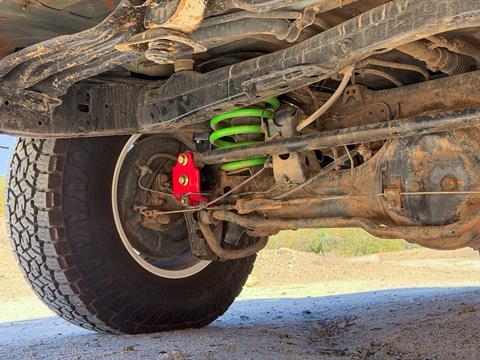
Equally important, the DR.KDSS Shorty has continued to perform without issue. The rear-end sway that originally prompted our panhard correction remains absent, and we’ve experienced no bracket-to-frame contact during our testing.
It’s worth emphasizing that these two components perform different jobs. The Shorty corrects the panhard bar geometry while providing additional bracket clearance, whereas the DuroBumps manage suspension compression near the end of its travel. Neither replaces the function of the other, but together they address two concerns we encountered while developing the LC100’s suspension.
Getting the Setup Right
One lesson we’ve learned throughout the OVR LC100 project is that suspension components need to work together. Correcting one problem can reveal another, and even a relatively modest lift can change how the suspension behaves under compression.
The DR.KDSS Shorty illustrates this well. While the original bracket delivered the improvement in handling we were looking for, its height wasn’t ideal for the amount of suspension compression our particular LC100 experienced. Changing to the shorter version gave us additional clearance without sacrificing the stable handling we’ve come to appreciate.
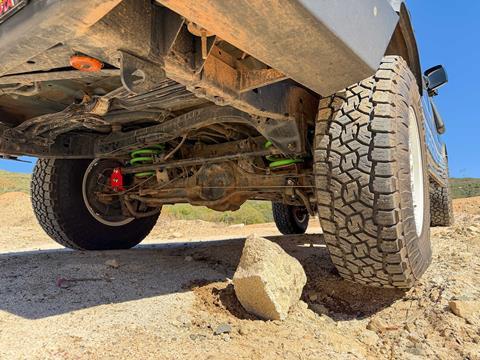
Bump stop selection deserves similar attention. Taller bump stops can provide earlier engagement during suspension compression, but there’s a trade-off to consider when it comes to available travel. The right combination depends on suspension height, component clearances, vehicle weight, and how the truck is used.
Our planned switch to the shorter DBRLC425 should provide a bump stop configuration better suited to our 2-inch lift. While we expect some benefit in available suspension travel, the actual difference will depend on how the bump stops compress and interact with the rest of the suspension. For now, the taller versions have performed well, and we’re looking at the change as another opportunity to refine the LC100’s setup.
This is where working with an experienced shop like RPM Off-Road Garage in Monrovia, California, has been valuable. Beyond handling the installation, RPM has helped us identify areas where adjustments could improve the truck’s overall performance. Their recommendation to add progressive bump stops was based on the type of off-road driving we do and the additional weight our Land Cruiser carries.
While both the DR.KDSS correction bracket and DuroBumps are designed with bolt-on installation in mind, having a shop familiar with lifted Land Cruisers involved has helped us make more informed decisions as the project develops.
Final Thoughts
Our latest suspension changes have addressed two concerns that became apparent only after spending considerable time driving the OVR LC100.
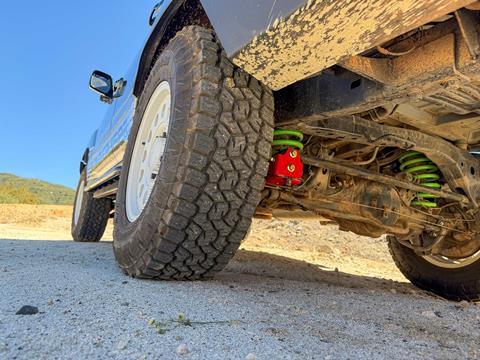
The DR.KDSS B.O.T.C.K Shorty has resolved the frame contact we occasionally experienced with the original bracket during our testing, while retaining the improved handling and straight-line stability that made the correction kit worthwhile in the first place.
The DuroBumps have also proven useful, helping soften several substantial impacts and making the rear suspension feel more controlled when encountering larger bumps and dips.
We’re pleased with how both upgrades have performed over the past several months. Our one remaining adjustment is replacing the current bump stops with the shorter DBRLC425 versions, which we believe will be a better match for our suspension setup.
For anyone building a lifted 100 Series Land Cruiser, these are worthwhile details to consider. Getting the panhard bar angle right is important, but so is finding the proper balance between suspension clearance, available travel, and protection against hard impacts.
Our LC100 is driving better than ever, and these latest changes have made it more predictable when the terrain gets rough. That’s exactly what we want from a vehicle intended to cover long distances on and off the pavement.
DR.KDSS B.O.T.C.K Shorty
Duro Bumps 100 Series Bump Stops
RPM Off-Road Garage
Read More About the OVR LC100 Project Build by Clicking Here!
For more informative articles like this, consider subscribing to OVR Magazine in print or digital versions here. You can also find the print edition of OVR at your local newsstand by using our Magazine Finder.



No comments yet