







Small adjustments to sunglasses, seating position, hair accessories and how you secure cargo can meaningfully reduce your injury risk in a collision — whether you’re on a remote trail or a routine commute across town.
Hidden Crash Hazards Every Driver Should Know
Simple changes involving sunglasses, hair accessories, seating position and loose cargo may help reduce injuries in a collision.
A pair of sunglasses would hardly seem like a safety concern. They reduce glare, make it easier to see in bright conditions and are part of the everyday equipment many of us keep in our vehicles. However, the material used to make their lenses can become important when an airbag deploys.
In 2021, Georgia resident Hannah Oliver was driving home when another vehicle pulled into her path. She was unable to stop in time, and the resulting collision triggered her airbag. According to Oliver, the airbag struck her designer sunglasses at an unfortunate angle and shattered their glass lenses. Fragments entered her right eye, detaching the retina and severing the optic nerve. She permanently lost sight in that eye.
Her experience raises a larger question: How many other seemingly harmless things inside our vehicles could contribute to an injury during a collision?
Long-distance travelers and off-road enthusiasts may spend more time thinking about vehicle recovery, mechanical failures and emergency supplies than occupant protection. Yet the precautions that may matter most are often much simpler. They apply on the highway, on a trail and during an ordinary trip across town.
Take a Closer Look at Your Sunglasses
Glass lenses continue to be used in many premium sunglasses because of their optical clarity and resistance to scratches. The tradeoff is that glass is heavier and generally more vulnerable to breaking under a significant impact than materials such as polycarbonate.
Polycarbonate lenses are lightweight and substantially more impact-resistant than glass. Under forces that could shatter conventional glass, polycarbonate is less likely to break into sharp fragments.
Trivex is another lens material worth considering. It combines strong impact resistance with good optical clarity and is commonly used for prescription and performance eyewear.

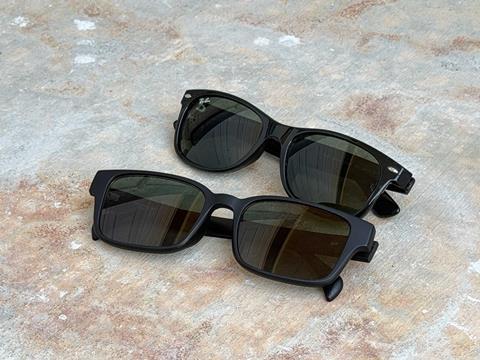
After learning about Oliver’s experience, I checked the Ray-Ban New Wayfarers I regularly wear while driving. Their factory G-15 lenses were made from crystal glass. I liked the frames and did not want to replace the sunglasses entirely, so I had aftermarket polycarbonate lenses installed instead. The change retained the familiar appearance while replacing the glass directly in front of my eyes with a substantially more impact-resistant material.
Model-specific polycarbonate replacements are also available from companies such as Revant, including lenses made for the RB2132 New Wayfarer. This allows owners to retain their existing frames while changing the material positioned directly in front of their eyes.
There are still some qualifications to keep in mind however. Polycarbonate does not automatically mean a pair of sunglasses qualifies as safety eyewear, nor does impact resistant mean shatterproof. Federal regulations require both glass and plastic sunglass lenses to meet a minimum impact-resistance standard, but passing that test does not eliminate the differences between materials.
That said, polycarbonate and Trivex generally offer substantially greater impact resistance than glass and are less likely to break into sharp fragments. Regular sunglasses, regardless of lens material, are not intended to serve as protective eyewear for high-impact sports or industrial work.
When purchasing replacement lenses, use a reputable optical supplier and verify that the lenses provide full UV protection, appropriate optical quality and a secure fit in the frame. Sunglasses intended for driving should also allow the wearer to recognize traffic-signal colors. ANSI Z80.3 is the relevant standard for nonprescription sunglasses and fashion eyewear, while eyewear marked ANSI Z87.1 meets a more demanding protective-eyewear standard.
Cheap replacement lenses may introduce distortion even if they are made from polycarbonate. One simple check recommended by the FDA is to look through the glasses at a straight vertical line while slowly moving your head from side to side. If the line appears to bend or wiggle as your eyes move across the lens, the lens may have an optical defect.
Rethink Hard Hair Accessories
Hard plastic and metal claw clips are another item many people never associate with vehicle safety. Because these clips are commonly worn at the back of the head, they can become trapped between the wearer and the head restraint during a rear impact.
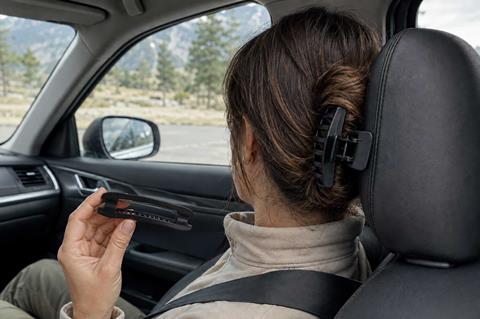
Several drivers and passengers have reported scalp wounds and embedded clip fragments following crashes. However, claw-clip injuries are not tracked well enough to determine how commonly they occur, and they should not be presented as one of the leading dangers inside a vehicle.
An unrestrained occupant or a heavy piece of loose cargo poses a much greater and better-established risk. Even so, removing a rigid hair clip is a simple precaution with little practical downside.
A fabric scrunchie or soft elastic tie remains the least rigid option, while flexible hair clips that bend more readily than conventional plastic or metal designs offer another alternative.
Although these flexible clips should not be considered crash-tested safety equipment, they present less of a rigid pressure point behind the head than a traditional claw clip.
Set Up the Driver’s Seat Correctly
The relationship between the driver, seat, steering wheel and airbag matters much more than many accessories. According to the National Highway Traffic Safety Administration, a driver should maintain approximately 10 inches between the breastbone and the center of the steering wheel whenever possible.
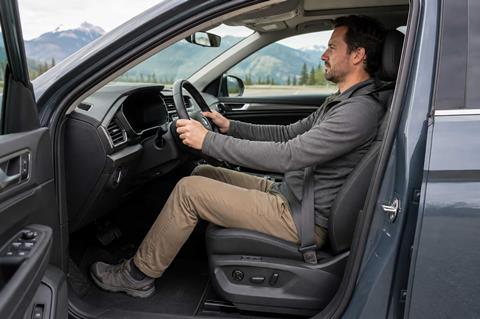
That distance gives the airbag room to inflate before the driver moves into it. Sitting too close can place the face and upper body in the airbag’s deployment path while it is still opening. Airbags inflate quickly and with substantial force because they must be ready before the occupant moves forward in a crash.
The seat should be far enough back to provide clearance without forcing the driver to stretch for the wheel or pedals. Sit upright and centered against the seatback, and adjust the steering wheel toward the chest rather than the face when the vehicle provides tilt and telescoping adjustment.
Drivers sometimes recline the seat excessively to create more steering-wheel clearance. A slight adjustment may help, particularly for shorter drivers, but leaning too far back can reduce the effectiveness of the seat belt and create a gap between the shoulders and seatback.
Do Not Forget the Head Restraint
What is commonly called a headrest is more accurately a head restraint. Its primary job is not comfort but limiting rearward head movement during a collision.
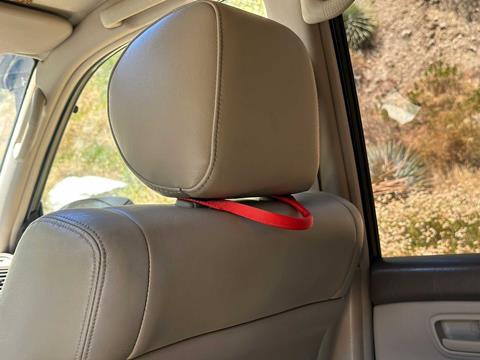
The restraint should be raised so its top is at least as high as the top of the ears and preferably close to the top of the head. It should also be positioned as close to the back of the head as the available adjustment and normal driving comfort permit.
The Insurance Institute for Highway Safety considers both height and the distance behind the head when evaluating head-restraint performance.
This is particularly worth checking when more than one person drives the same vehicle. Seat-memory systems may return the seat and mirrors to a saved position without changing a manually adjusted head restraint. Passengers should check theirs as well rather than leaving it fully lowered.
Wear the Seat Belt as Designed
Airbags supplement seat belts; they do not replace them. The belt helps control the occupant’s movement and keeps the body in a position where the airbag can provide its intended protection.
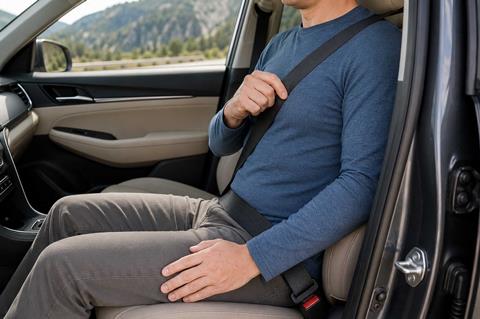
The lap portion should sit low across the hips rather than over the abdomen. The shoulder belt should cross the center of the chest and rest on the shoulder. Placing it behind the back or beneath an arm may feel more comfortable, but it concentrates crash forces in areas that are less able to withstand them.
Bulky jackets can also create slack or keep the lap belt from lying properly across the hips. You do not necessarily need to remove every coat, but the belt should be tightened against the body rather than left loose over thick clothing.
These rules apply equally to the rear seats. An unbelted rear passenger can strike the seat, another occupant or the vehicle’s interior during a crash. Everyone should buckle up, even on a short trail transfer or slow drive around camp.
Keep Airbag Deployment Areas Clear
Aftermarket accessories can create problems if they are installed over an airbag cover or within its deployment path. Phone mounts, tablets, auxiliary gauges and other equipment should never cover airbag seams or be positioned where an inflating airbag could throw them toward an occupant.
NHTSA has issued a specific warning about decorative steering-wheel emblems, including metal and rhinestone-covered decals placed over the factory logo. In documented crashes, deploying airbags dislodged these decorations and drove them into occupants’ faces and necks. One driver lost sight in an eye. Unlike the factory emblem, these stick-on decorations were not engineered as part of the steering-wheel airbag assembly.
Dash covers and seat covers require similar attention. Many newer vehicles have side airbags built into the front-seat bolsters. A generic cover can obstruct or redirect an airbag as it exits the seat. Owners should look for an “SRS AIRBAG” label on the side of the seat and use only covers specifically designed and tested for that vehicle’s airbag configuration.
This is especially applicable to off-road vehicles, where owners frequently install protective seat covers to guard against mud, water and trail debris.
Secure the Gear You Carry
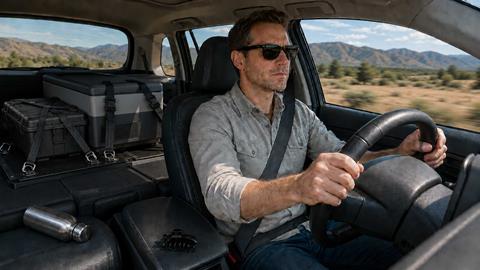
Loose cargo may be the most relevant hidden crash hazard for an overland vehicle. A truck or SUV prepared for travel can carry tools, recovery gear, water containers, camp equipment, camera cases, refrigerators and portable power stations. Much of it is heavy enough to cause significant injury if it moves during a sudden stop, crash or rollover.
Items in a drawer are not necessarily secure unless the drawer has a positive latch. Refrigerators, battery systems, fire extinguishers and storage boxes should be attached to mounting points capable of handling more than ordinary trail vibration. Elastic cords may stop equipment from sliding around but should not be treated as crash restraints.
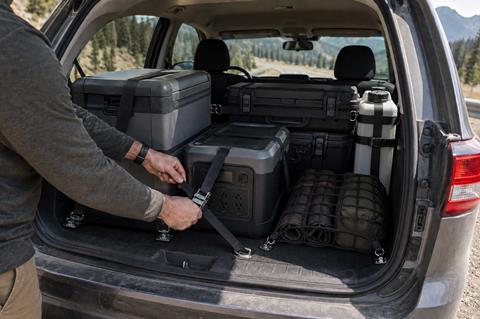
Place heavier equipment low in the vehicle and against a seatback or other solid structure when possible. Use factory cargo anchors with correctly rated straps, and consider a cargo barrier or properly fitted net in an SUV or wagon.
Small objects deserve attention too. A metal water bottle, handheld radio, flashlight or camera lens can travel through the cabin during an impact.
Pets should ride in a secured crate or use an appropriate vehicle restraint. This protects the animal and reduces the chance of it striking another occupant or interfering with the driver.
Keep Feet off the Dashboard
Passengers sometimes place their feet on the dashboard during long highway drives. It may feel comfortable, but it puts the legs directly over the passenger airbag.

If the airbag deploys, it can force the knees and legs back toward the face and upper body. Even without airbag deployment, sitting this way places the passenger in a poor position for the seat belt to manage crash forces. Front passengers should sit upright against the seatback with their feet on the floor.
Arms and legs should also be kept away from side-airbag areas in the doors and seat bolsters. Sleeping passengers should not lean their heads against a door that contains a side curtain or torso airbag.
Check the Driver’s Floor Mat
A poorly fitted floor mat may cause the crash rather than make its injuries worse. Mats that are the wrong size, stacked on top of one another or left unsecured can slide beneath the brake pedal or trap the accelerator.
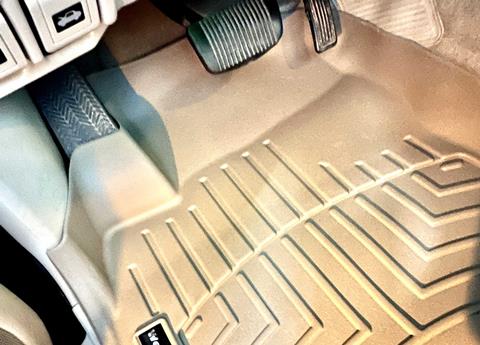
Use mats designed for the specific vehicle and engage the factory retention clips. Do not place an all-weather mat over a carpeted mat, and check that aftermarket liners do not curl near the pedals.
This is particularly important after removing mats for cleaning or swapping between seasonal sets.
Off-road drivers should also inspect the footwell after a trip. Mud, gravel and other debris can accumulate around pedal pivots or beneath floor liners.
A Five-Minute Safety Check
None of these precautions requires a major vehicle modification. Before the next drive, check the material used in your sunglasses, remove rigid hair accessories, set the head restraint correctly and confirm that your seating position provides enough airbag clearance.
Inspect the seat belt routing, floor mat attachment and anything mounted near an airbag. Then look behind the seats. Secure the tool bag, latch the drawers, tie down the refrigerator and find a better location for the metal bottle rolling around the floor.
A collision can happen during an expedition, on a highway commute or a few blocks from home. We cannot control every circumstance leading to one, but we can avoid adding unnecessary hazards to the vehicle’s interior.
Access More Great Stories!
For more informative articles like this, consider subscribing to OVR Magazine in print or digital versions here. You can also find the print edition of OVR at your local newsstand by using our Magazine Finder.




No comments yet